
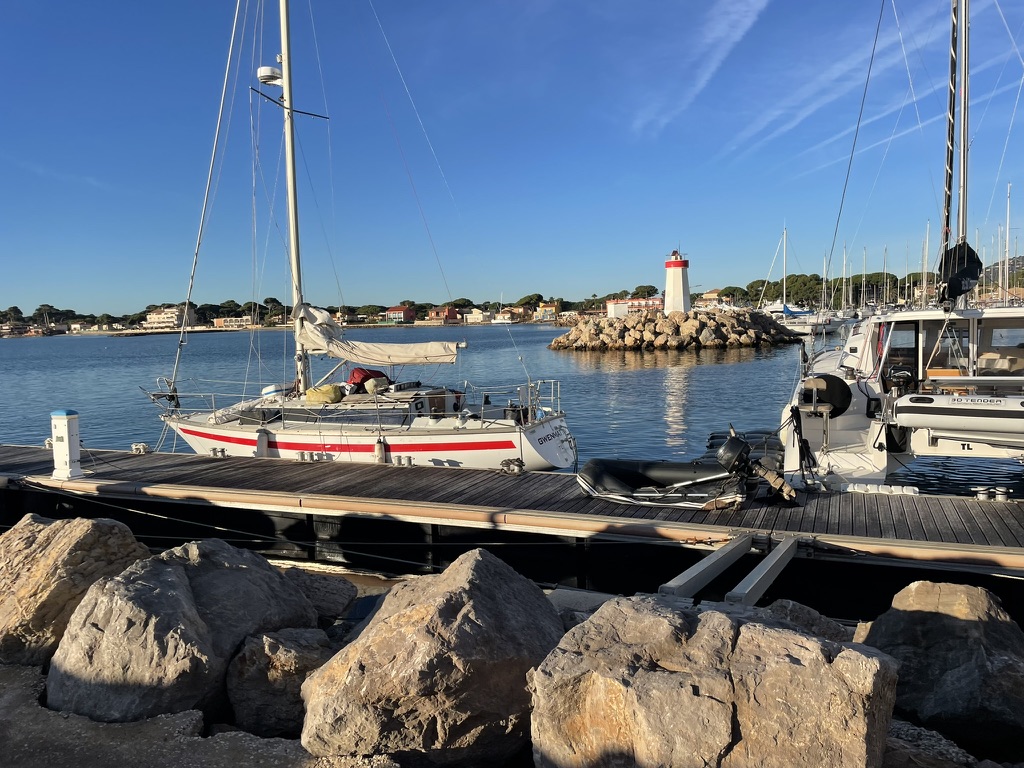
We went to Hyères, France, to replace Juno’s standing rigging. Hyères is a small port city on the southern Mediterranean coast. The nearest large towns to Hyères are Toulon to the west and Saint-Tropez to the east. Hyères serves as Amel’s Mediterranean base, featuring excellent riggers and numerous marine businesses. Afterall, who wouldn’t want to explore the renowned French Riviera?
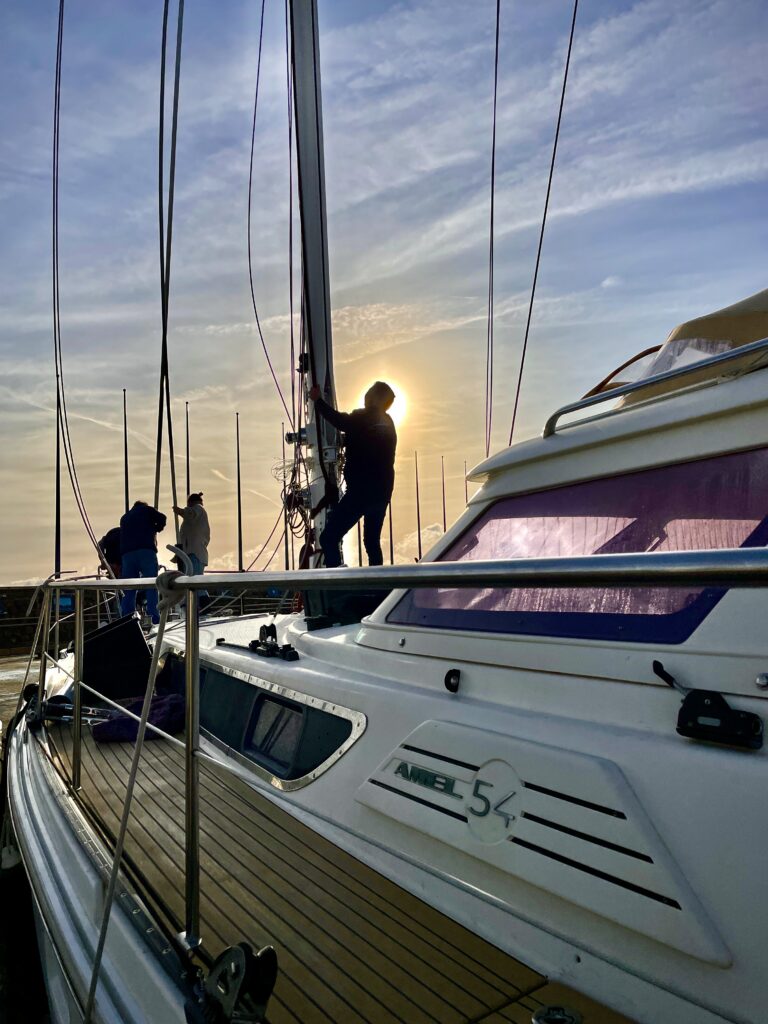
The voyage from Port Ginesta to Hyères covered approximately 220 nautical miles. This was our very first sailing experience on Juno. Navigating north in December across the Mediterranean Sea can be quite challenging due to frequent winter storms, particularly the Mistral1. We chose a calm weather window for our journey and primarily motor-sailed. The entire trip took around 1.5 days.
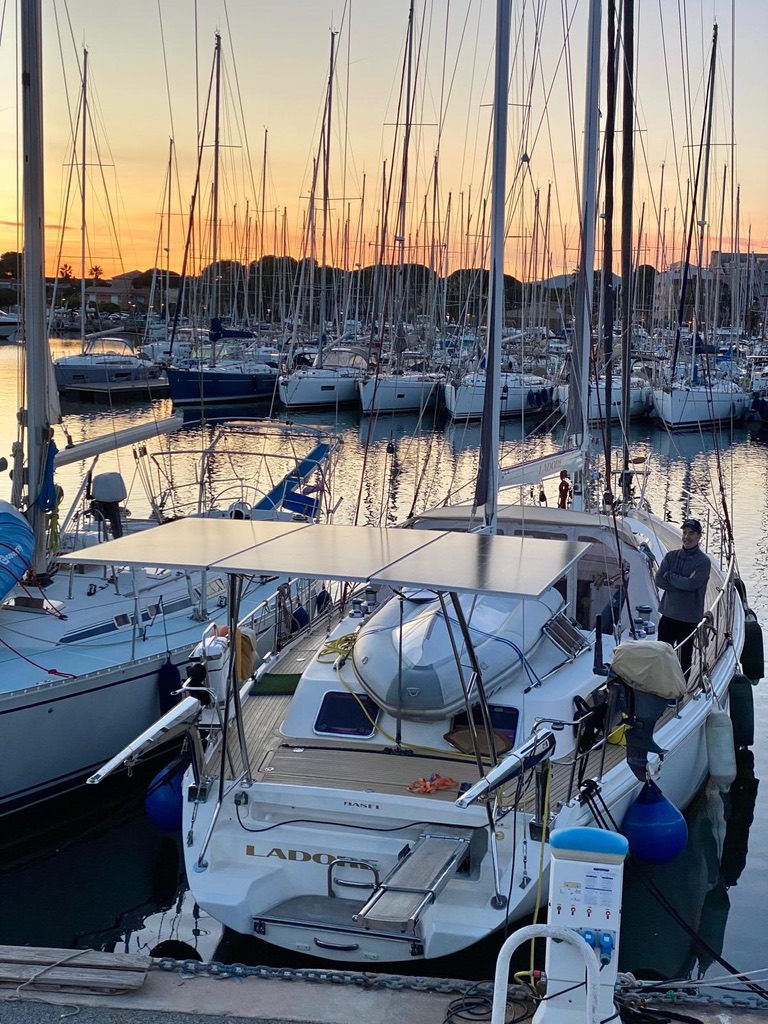
As soon as we passed the lighthouse at the harbor entrance, following the instructions from the rigging company in France, we noticed a couple of guys on the dock waving and signaling us to approach a marina slip. My heart sank when I saw the size of the slip they directed us to. There was no way we could fit in that narrow space, I thought. To make matters worse, this was our first time med-mooring!2
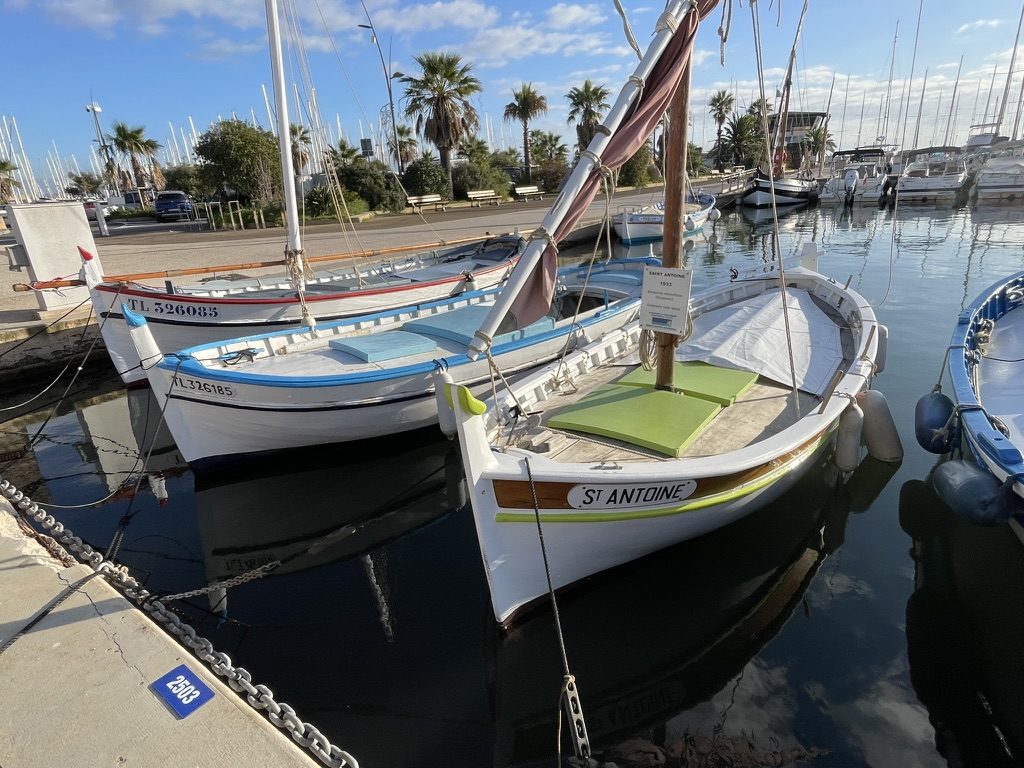
Captain Robert remained composed as he skillfully maneuvered Juno, perfectly angling her to windward (12kts) and then reversing for a tight turn to align her stern with the narrow entrance of the slip. Even the Frenchmen on the dock complimented his handling afterwards. A French lady stood on the deck of her beautiful antique wooden sailboat, positioned on Juno’s starboard side, watching us nervously. After some pushing and tugging, Juno wedged her way into the slip. The space was so tight that the French lady had to sit on the edge of her side deck and use her legs to push the two boats apart so I could pass the slime-line between fenders. I was amazed that we accomplished this without any yelling or panic! I felt so proud of Captain Robert!

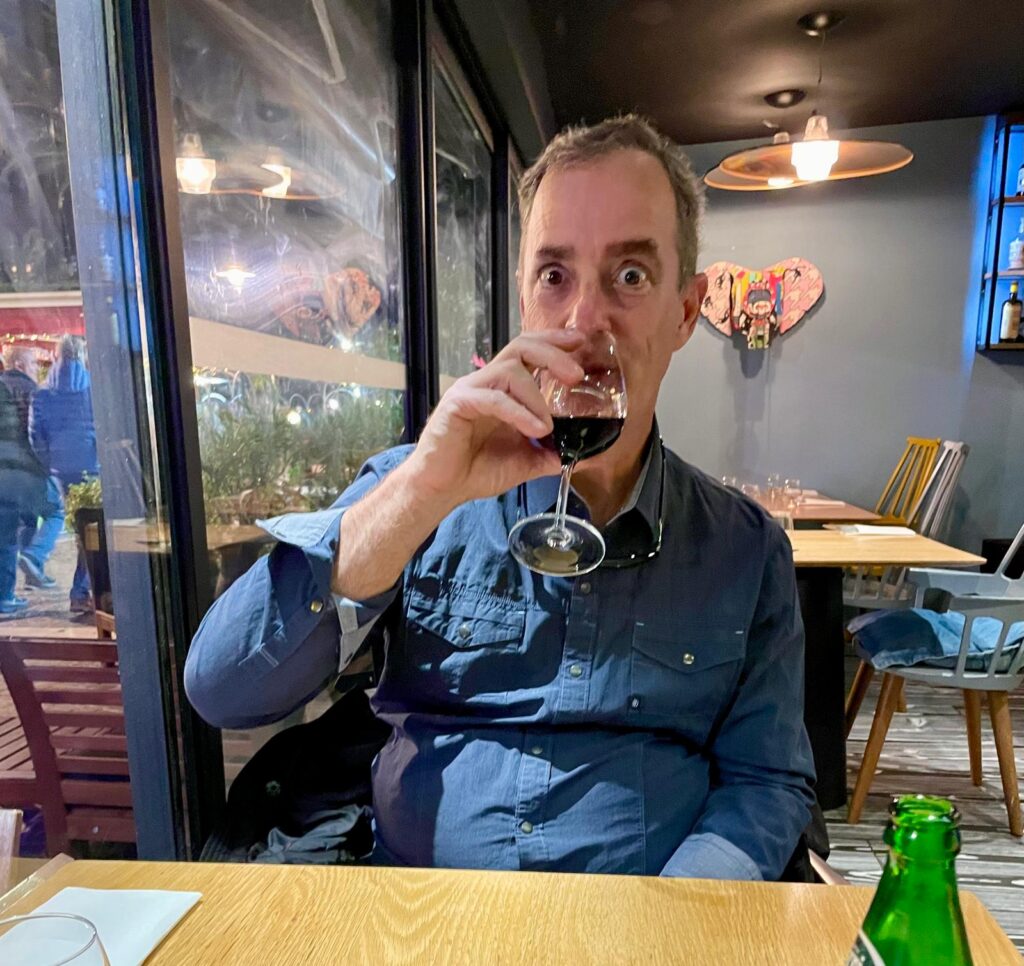
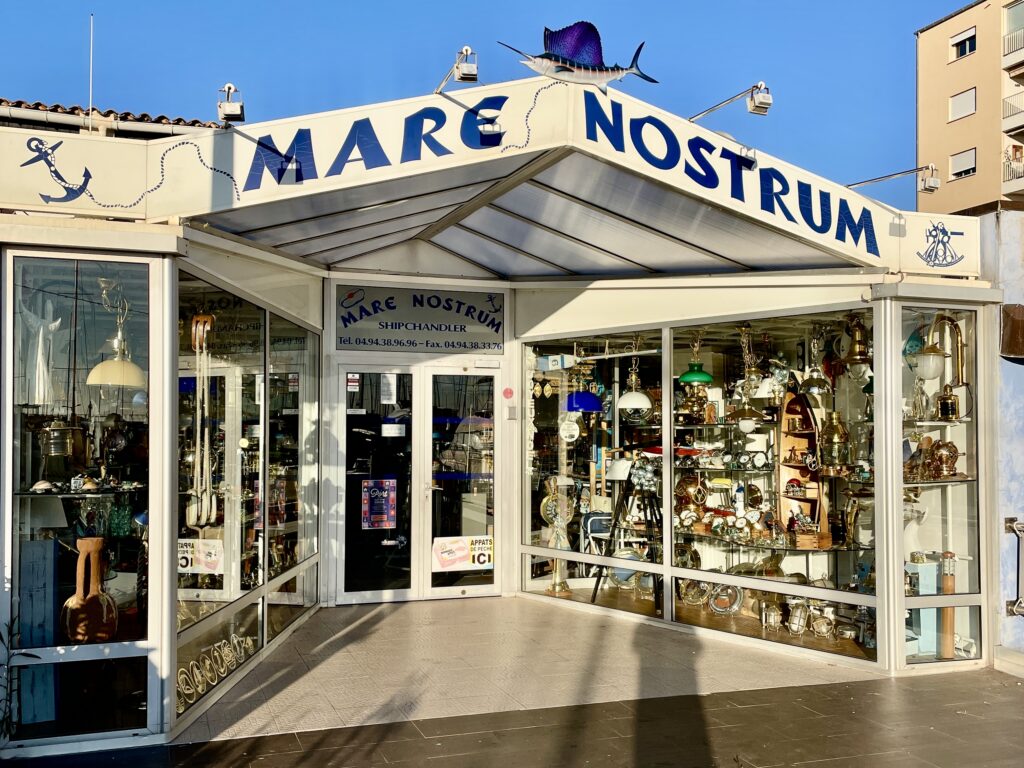
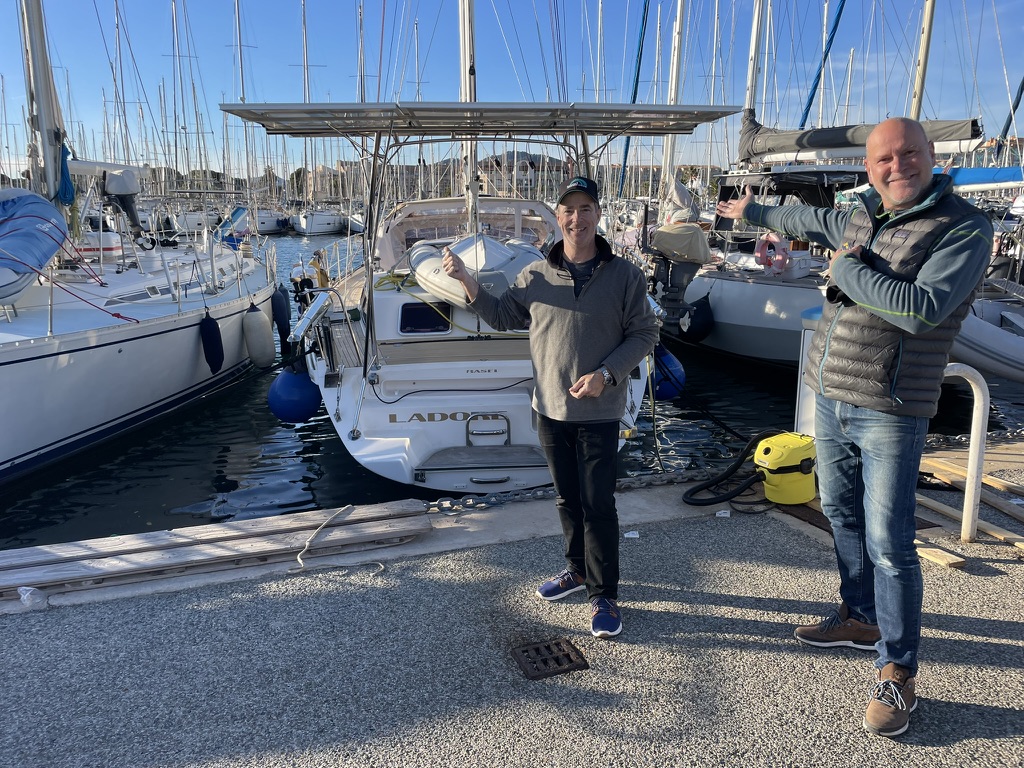
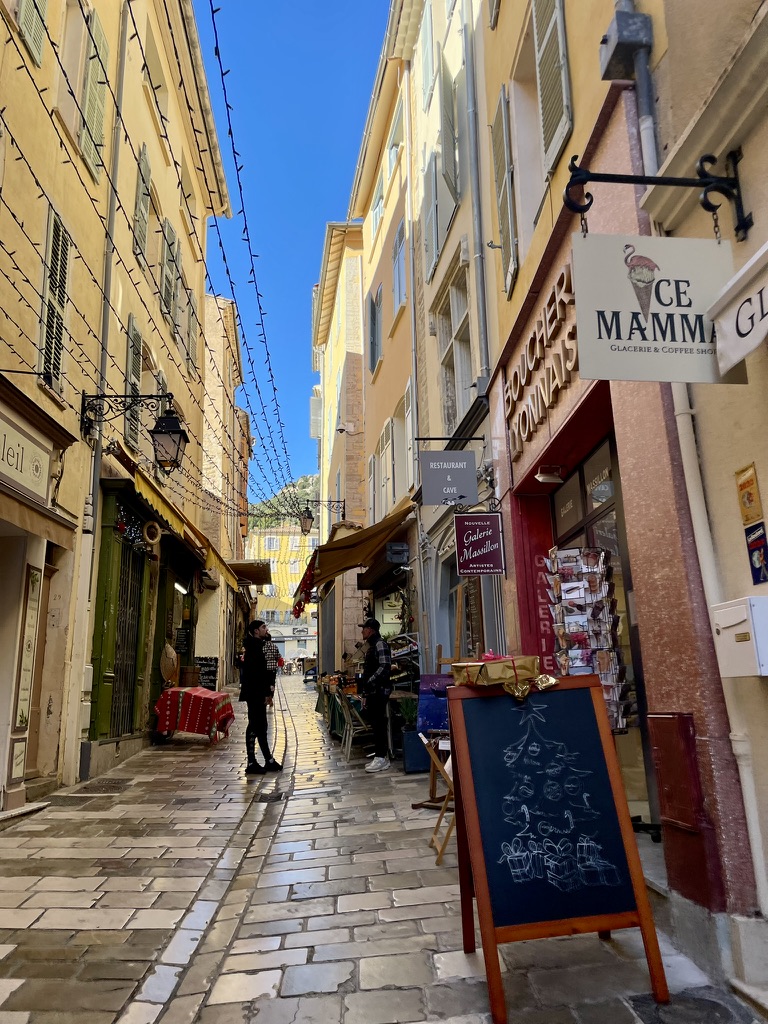
We spent over a month at Port d’Hyères Marina, which turned out to be an ideal location for completing various boat projects before our Atlantic crossing. During our stay, we were able to find skilled technicians and craftsmen, source various boat parts from the two ship chandlers next to the marina, and even enjoy some sightseeing.
We completed several upgrades, including replacing our house batteries from lead-acid to LiFePO4, installing an arch with three 460W solar panels, repairing the second deep freezer, replacing the freshwater pump, fixing the hydraulic passerelle, upgrading the interior and navigation lights to LED, and replacing the standing rigging. Juno certainly received many costly upgrades for Christmas!

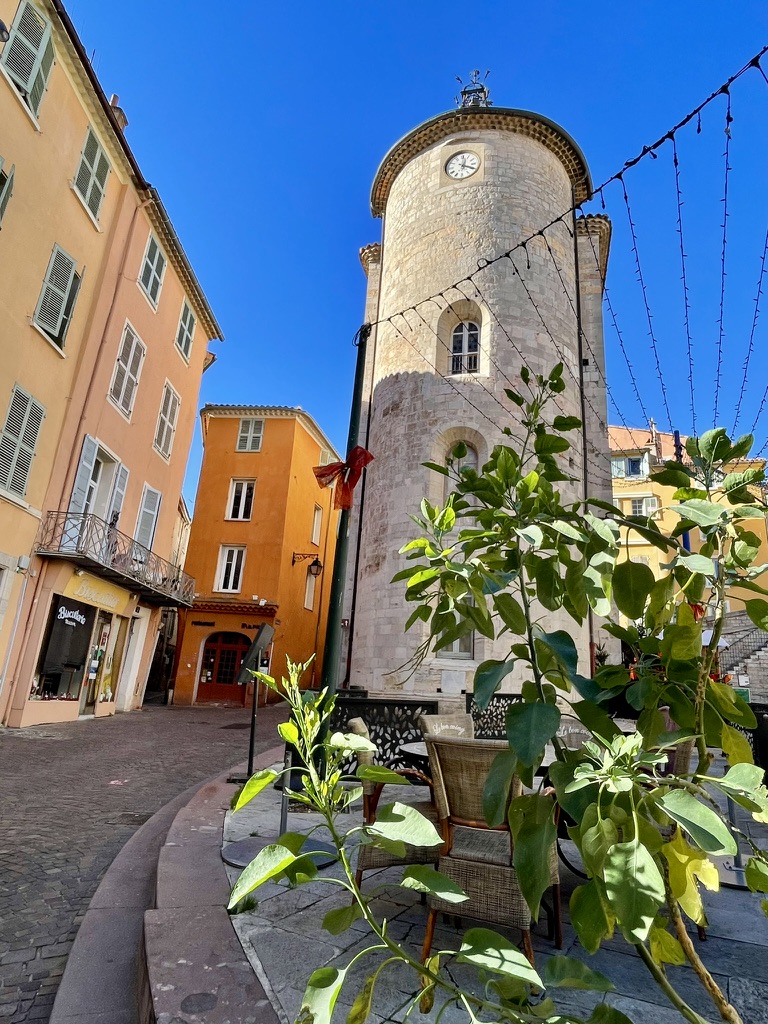
“The Saint-Blaise Tower is the only remaining vestige of the Templar commandery established in the 12th Century. Like the Templars themselves, the tower served two purposes: religious, with a chapel on the ground floor, and military, with a guardroom on the first floor, accessible only from the outside via removable stairs. A staircase built into the thickness of one of the walls provides access to the fortified terrace at the top of the structure.”
- The Mistral is a powerful, cold, dry northwesterly wind blowing from southern France down the Rhône Valley to the Mediterranean’s Gulf of Lion, known for its intense strength (often 50-100 km/h, sometimes higher) ↩︎
- Med mooring with a slime line (or lazy line) is a stern-to docking method common in the Mediterranean, where you back your boat to the quay, using a line from the seabed (the slime line) attached to your bow to hold you off, while stern lines secure you to the dock, maximizing space. ↩︎
Leave a Reply