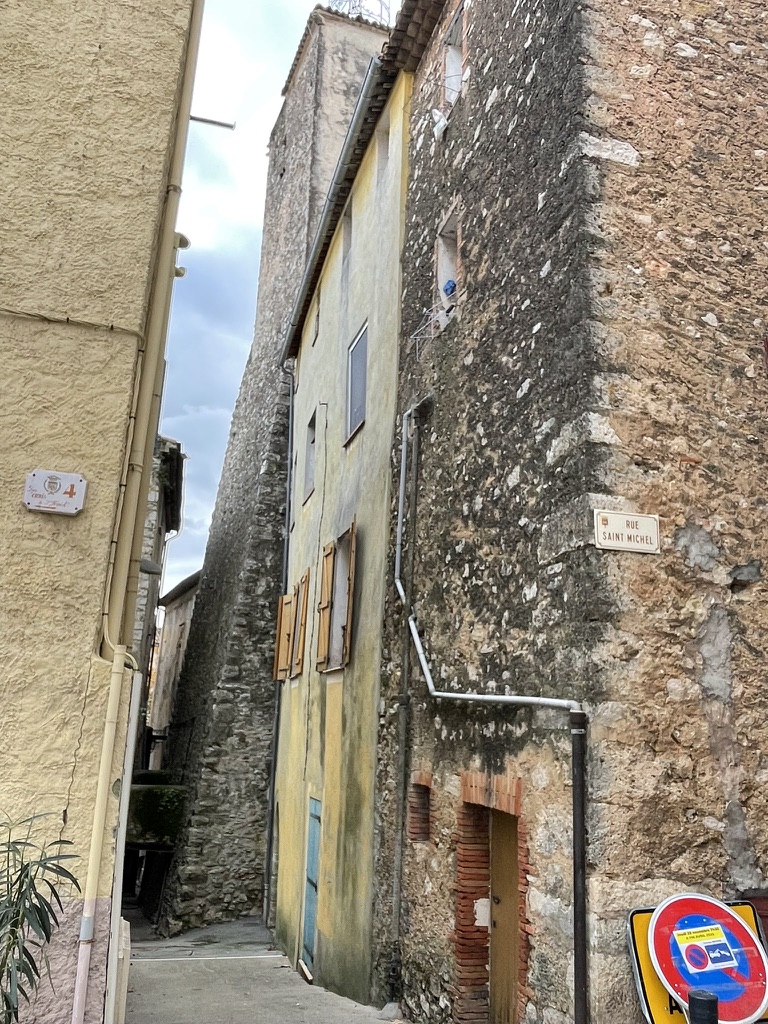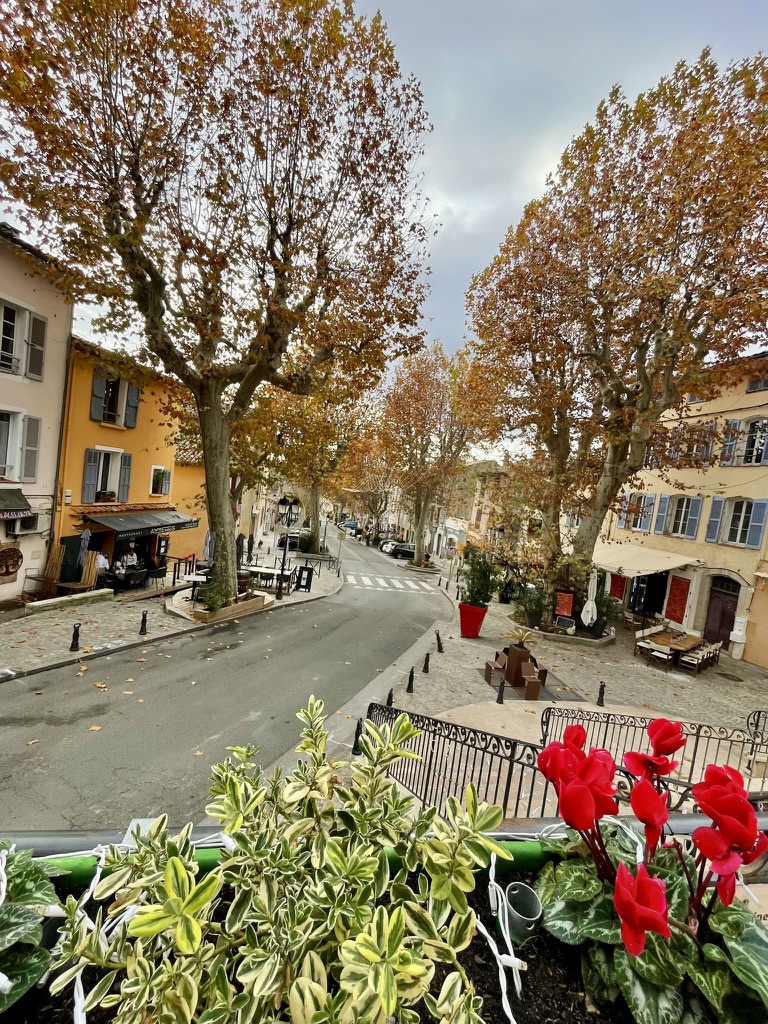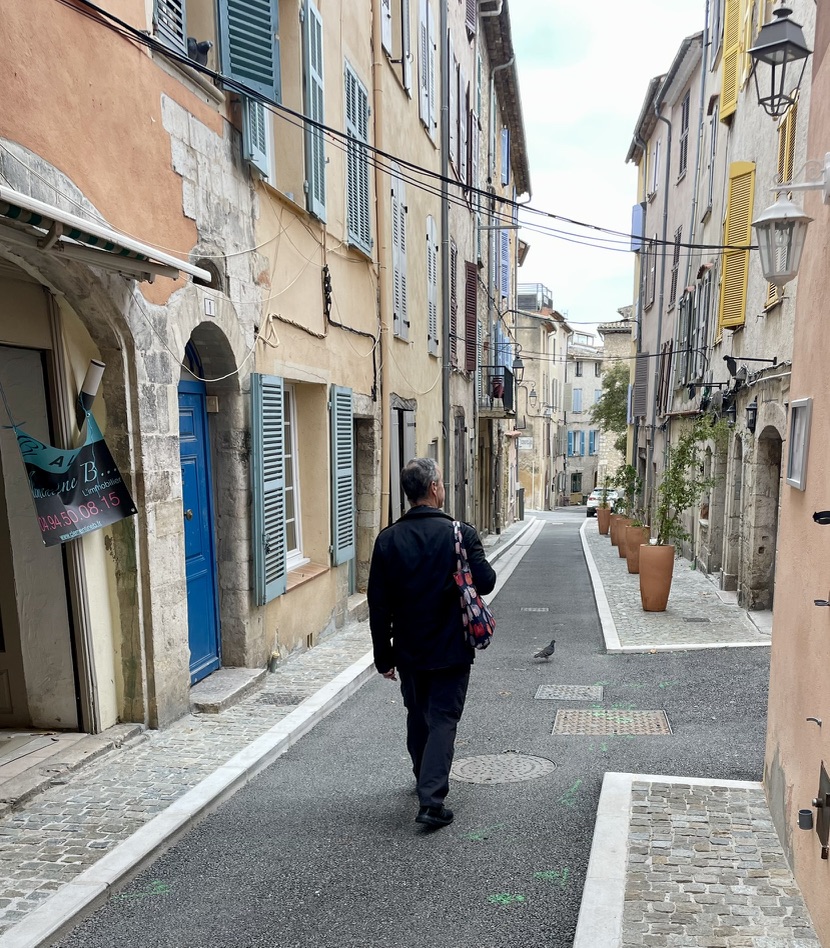
• While waiting for our rigging work in the Port of Hyeres, France, we took a couple of days off from boat projects and visited a few towns in Provence.

    Visiting the town of Lorgues had been on Robert’s bucket list for a long time. He traced his family tree from Quebec, Canada, back to Lorgues, France, where his first old-world ancestor departed for the French and Indian War in the 18th century. Since Lorgues is only about 75 kilometers from Hyères, we definitely could not miss this opportunity.

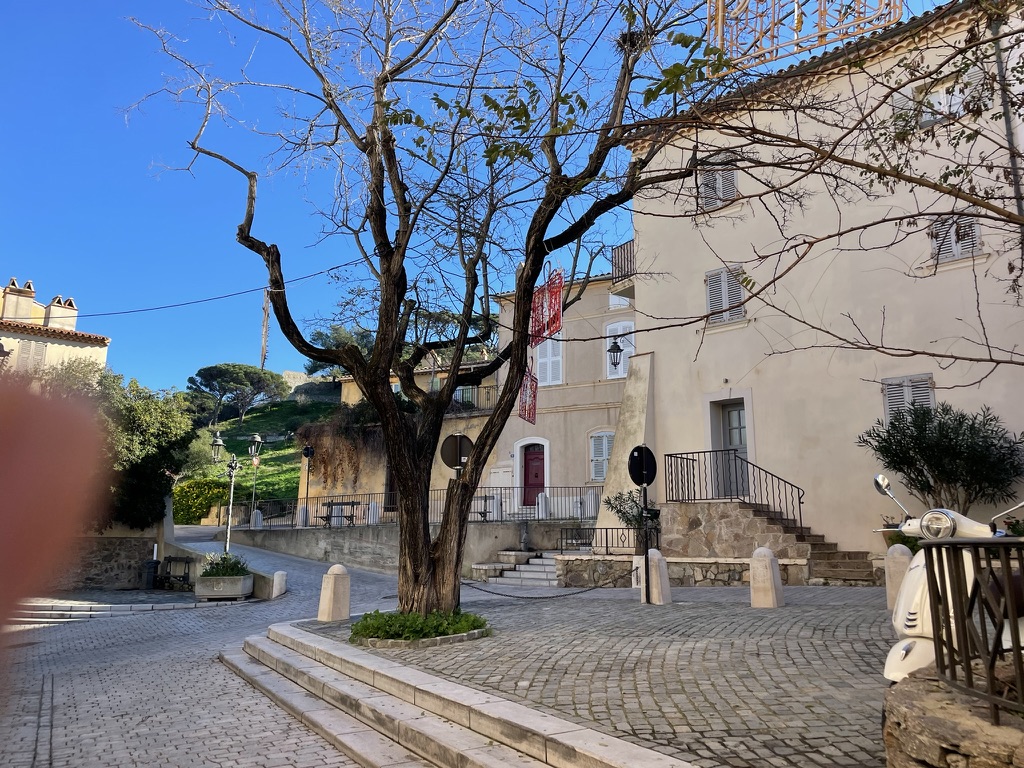
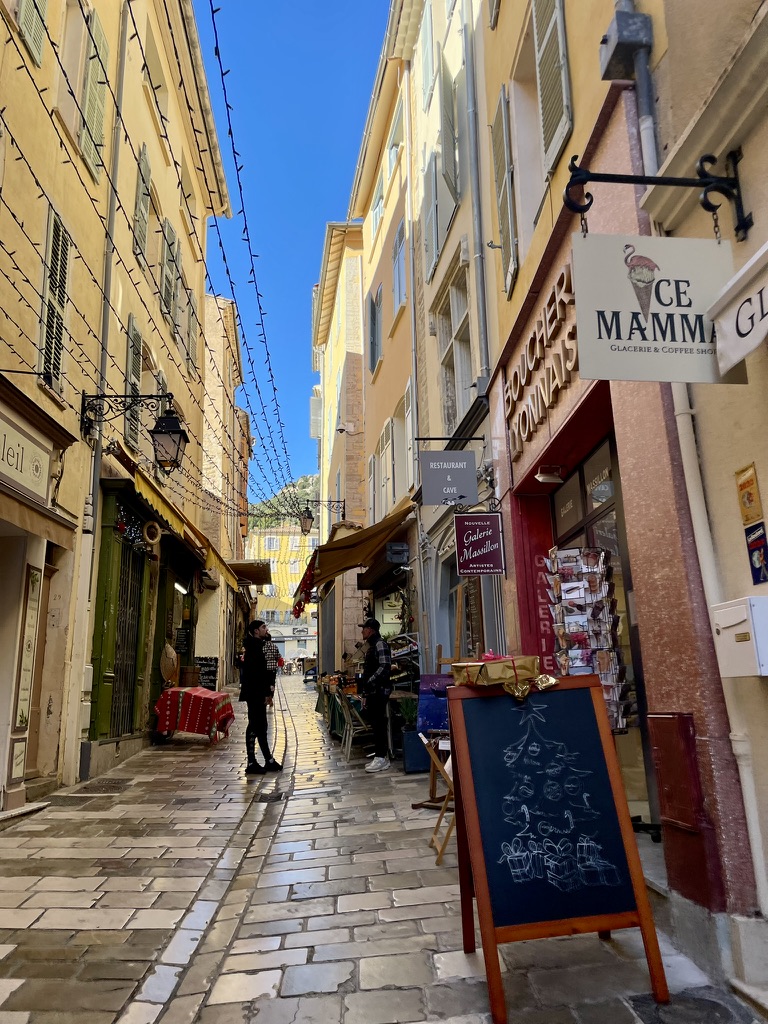
    After about an hour’s drive from Port of Hyères, we arrived in a picturesque and tranquil mountain town that felt like stepping back in time. As we wandered through the medieval town center and walked along the narrow cobblestone streets lined with stone houses, we reflected on the lives of Robert’s ancestors. We imagined the challenges he faced before leaving France for the unknown and frigid frontier.

    After wandering through narrow streets and visiting the local cemetery in search of possible deceased relatives without much success, we joined the locals at a café near the town square for some coffee and tea. It felt as if time had stood still here, with people living in the same way for decades, if not centuries. In late November, there were few tourists. The town residents leisurely enjoyed a sunny Saturday afternoon in cafes and pubs, taking their time without any hurry.
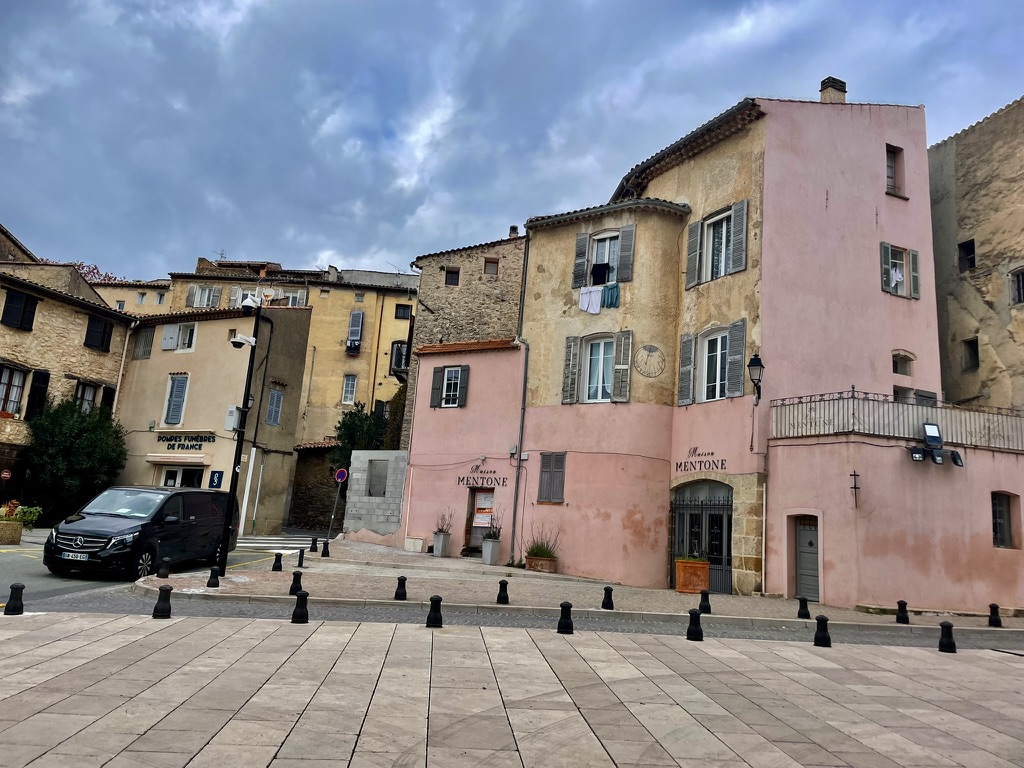
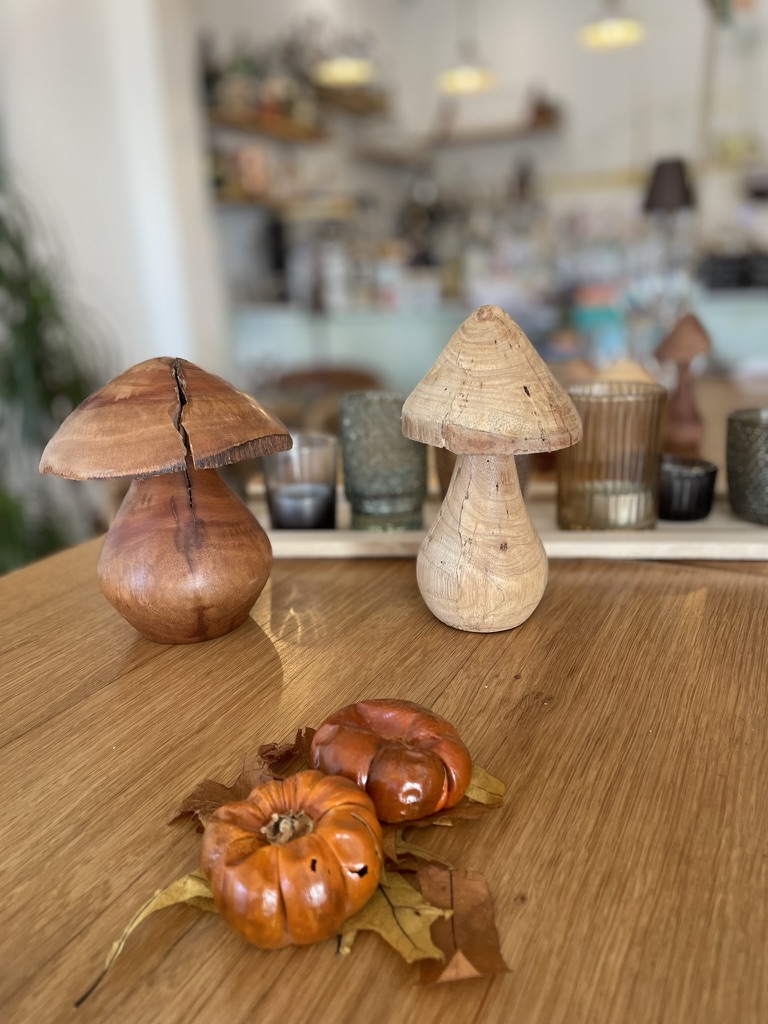
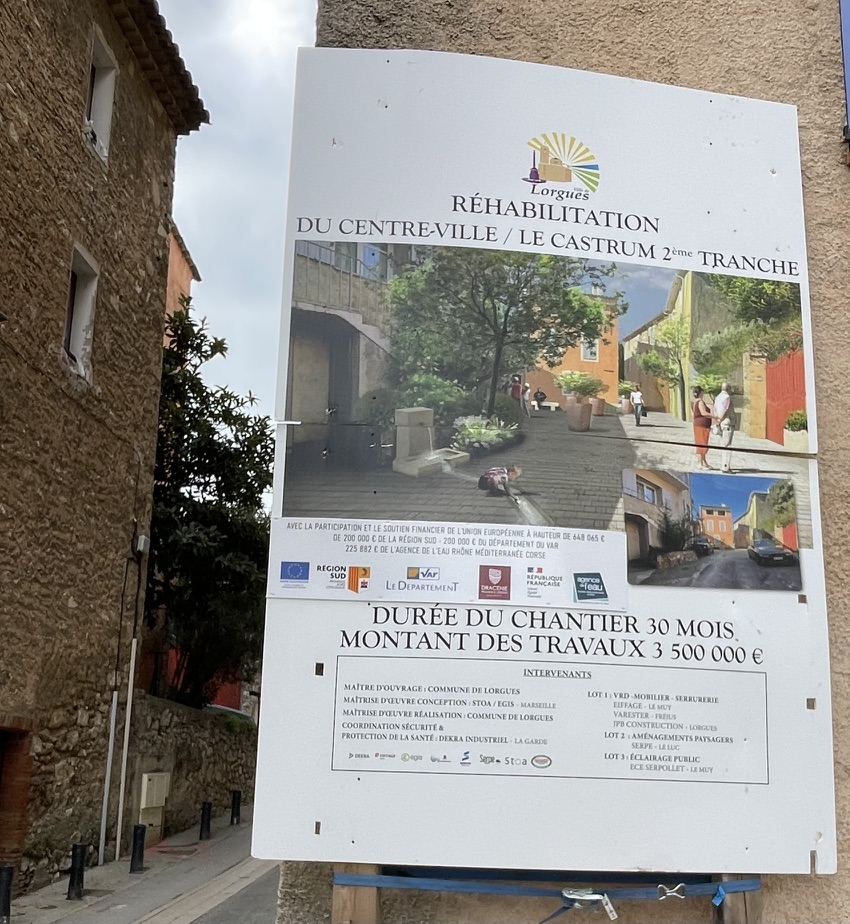
    Lorgues has significant historical connections to the Knights Templar, established in the area around 1156. The township is currently undertaking a restoration project to preserve several centuries-old structures that are in poor condition.

    Next stop Saint-Tropez

    When we told our French acquaintances that we were going to Saint-Tropez, none of them seemed particularly impressed by the town. To the French, it is just another charming coastal village that has suffered from over-tourism. In contrast, when I mentioned this trip to my American friends, everyone was envious and captivated by the idea, as it evokes old-Hollywood glamour and lifestyles of the rich and famous for them. The reality may be closer to the French view.

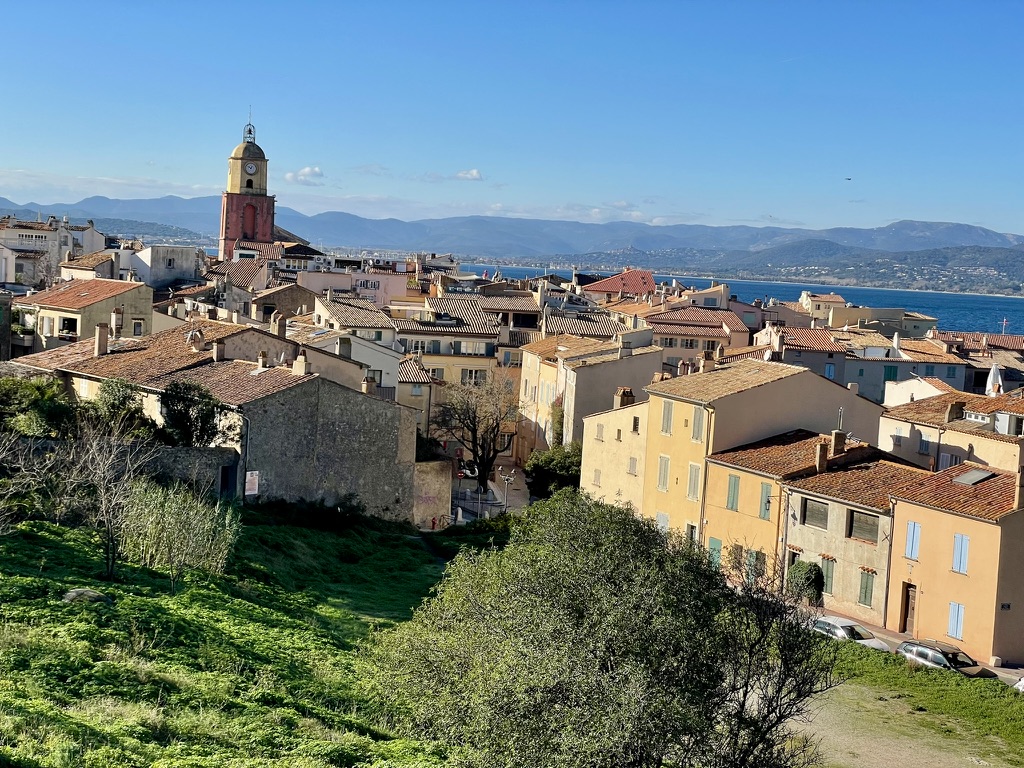
    The coastal road to Saint-Tropez along the Gulf of Saint-Tropez is breathtaking. It’s no wonder the French Riviera remains a highly sought-after vacation destination

    Our first order of business was to find a parking spot. While searching, we accidentally turned onto a narrow street that was too tight even for our tiny French rental car. After a close call where we nearly got stuck and an encounter with an angry old Frenchman, we managed to back out slowly without causing any damage. Phew! Eventually, we found a place to park for free behind a row of luxury stores that were all closed on Sunday. That didn’t matter to us since we weren’t in town for shopping; our luxury shopping funds are reserved for our “lady” Juno.

    With only a day to see this world-famous town, we were eager to begin our exploration on foot.

    Our first stop was the waterfront, a haven for mega yachts. It was impressive, but I had encountered similar sights in Miami and Fort Lauderdale. This could be attributed to the season; in December, many super yachts are likely docked in the Caribbean.

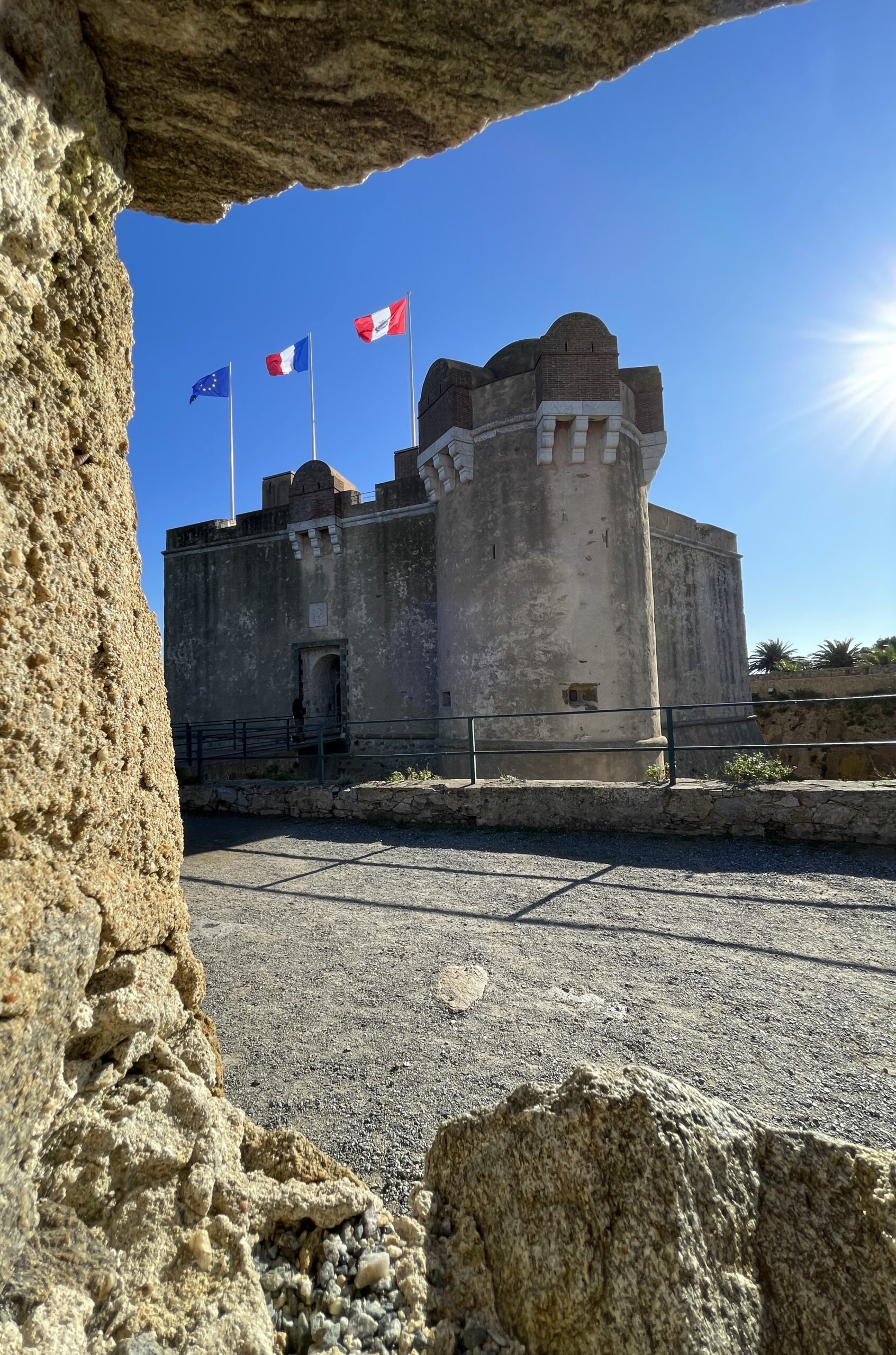
    We then visited the famous La Tarte Tropezienne, explored the Citadel of Saint-Tropez, and enjoyed a lovely lunch at one of the many waterfront restaurants. Saint-Tropez is undeniably a beautiful seaside town.

    Expectation, however, is a funny thing. The fame of Saint-Tropez created high hopes for my visit. However, I found the town to be very touristy and not as lively or charming as I’d anticipated. I would have loved to have visited Saint-Tropez before Brigitte Bardot made it famous in the 50’s, when it was still a modest fishing village, nestled in the picture-perfect Golfe de Saint-Tropez.
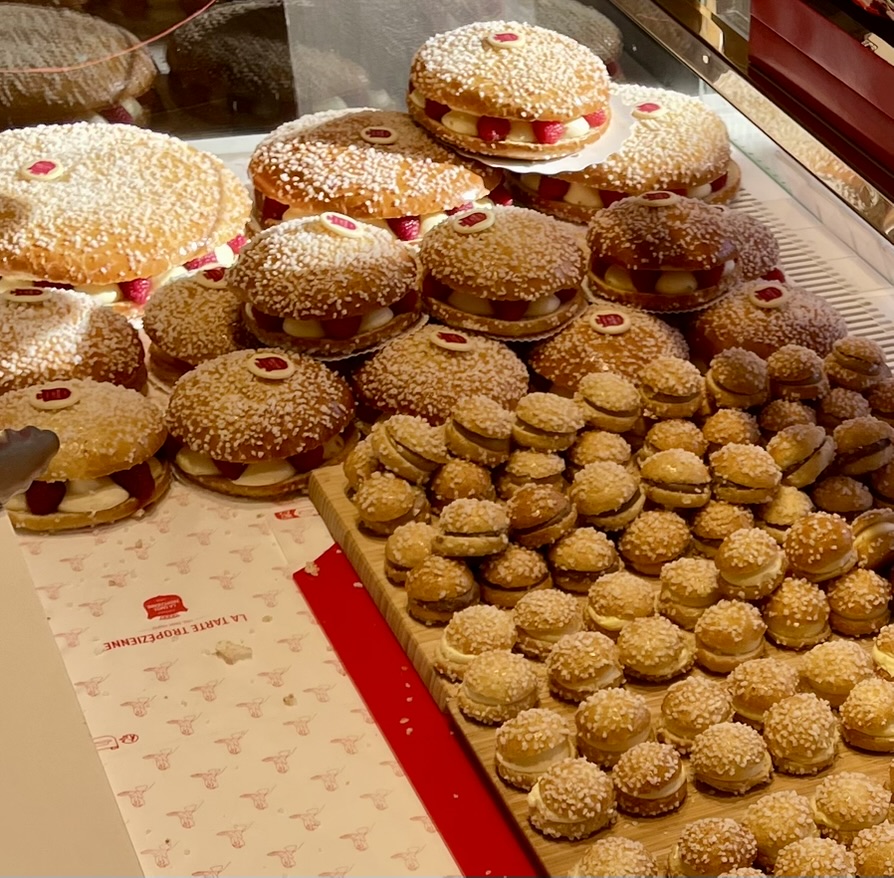
    Tarte tropézienne, also known as “la tarte de Saint-Tropez,” is a dessert pastry made of a split brioche filled with a mix of two creams, thick pastry cream and buttercream, topped with pearl sugar. It was created in 1955 by Polish pastry chef Alexandre Micka, a pâtisserie owner in Saint-Tropez, where he moved in 1945 just after the war.
    17th century Citadel overlooking the village of Saint-Tropez
    Classic French Beef Tartare for lunch – delicious!

    Final note on the road trip: the drive from Saint-Tropez back to Hyères was quite an adventure. I had no idea that the southern coast of France is so mountainous! The locals drive very fast on these winding and steep roads, and so did Robert, keeping me on the edge of my seat and fully awake, until we finally reached Hyères.
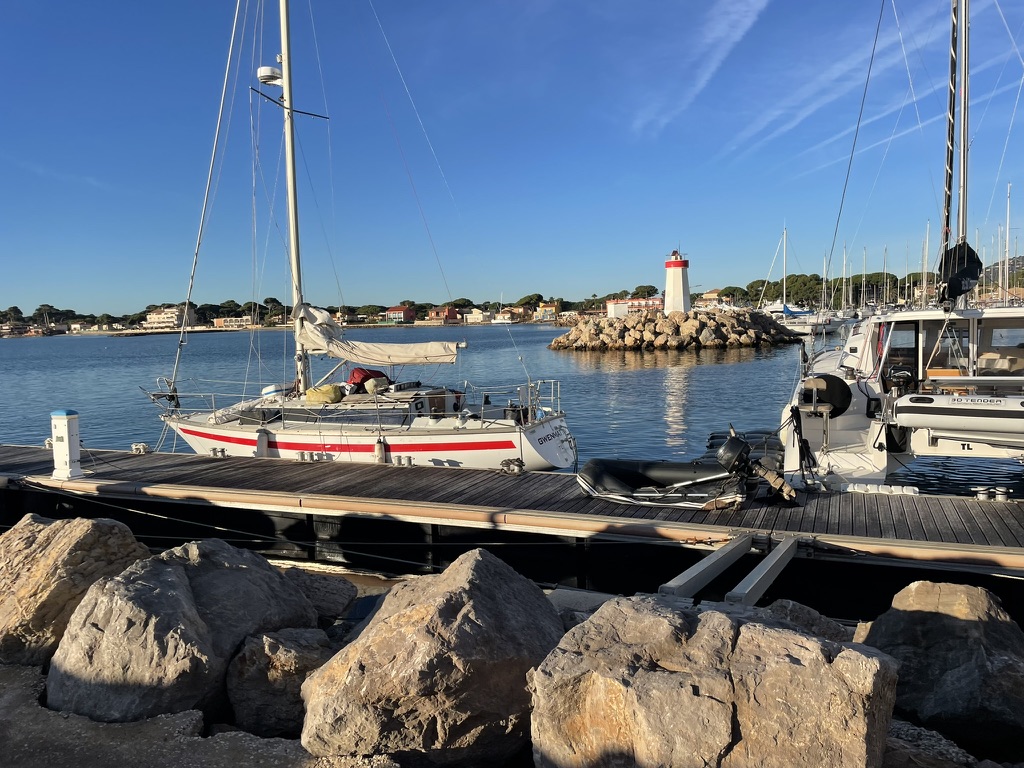
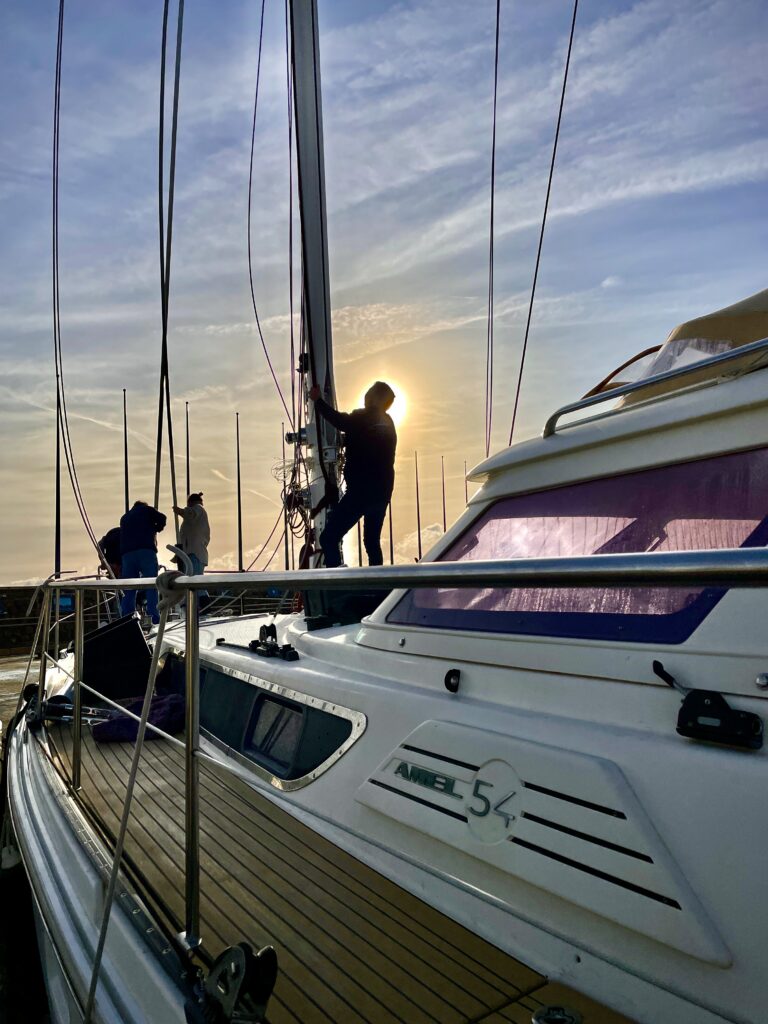
  • We went to Hyères, France, to replace Juno’s standing rigging. Hyères is a small port city on the southern Mediterranean coast. The nearest large towns to Hyères are Toulon to the west and Saint-Tropez to the east. Hyères serves as Amel’s Mediterranean base, featuring excellent riggers and numerous marine businesses. Afterall, who wouldn’t want to explore the renowned French Riviera?

    Pulling our masts for the re-rigging job, workers from Seanergie Nautic led by Didier Zappa, perform like a well oiled machine.
    Pulling our masts for the re-rigging job, workers from Seanergie Nautic led by Didier Zappa, perform like a well oiled machine.

    The voyage from Port Ginesta to Hyères covered approximately 220 nautical miles. This was our very first sailing experience on Juno. Navigating north in December across the Mediterranean Sea can be quite challenging due to frequent winter storms, particularly the Mistral1. We chose a calm weather window for our journey and primarily motor-sailed. The entire trip took around 1.5 days.

    As soon as we passed the lighthouse at the harbor entrance, following the instructions from the rigging company in France, we noticed a couple of guys on the dock waving and signaling us to approach a marina slip. My heart sank when I saw the size of the slip they directed us to. There was no way we could fit in that narrow space, I thought. To make matters worse, this was our first time med-mooring!2

    Captain Robert remained composed as he skillfully maneuvered Juno, perfectly angling her to windward (12kts) and then reversing for a tight turn to align her stern with the narrow entrance of the slip. Even the Frenchmen on the dock complimented his handling afterwards. A French lady stood on the deck of her beautiful antique wooden sailboat, positioned on Juno’s starboard side, watching us nervously. After some pushing and tugging, Juno wedged her way into the slip. The space was so tight that the French lady had to sit on the edge of her side deck and use her legs to push the two boats apart so I could pass the slime-line between fenders. I was amazed that we accomplished this without any yelling or panic! I felt so proud of Captain Robert!

    Juno tucked in tightly
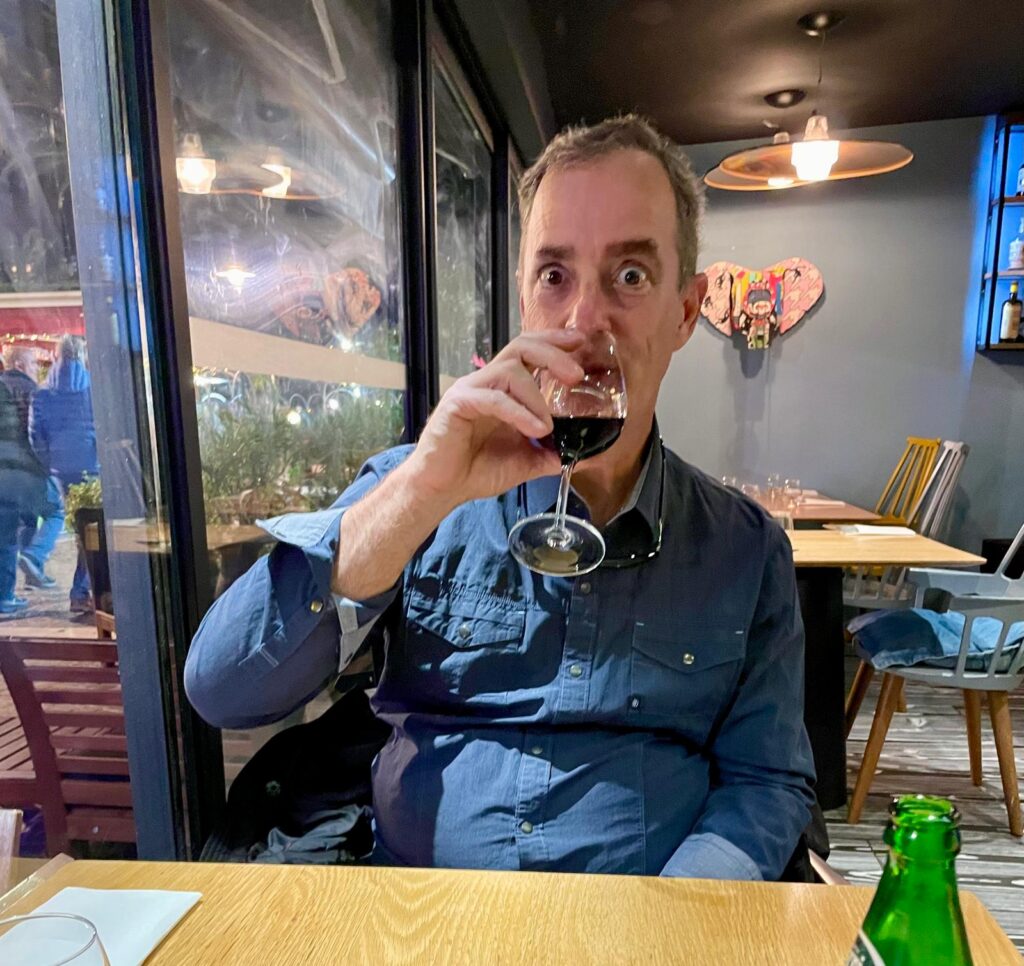
    Much-needed French wine to calm the nerves after the first passage.

    We spent over a month at Port d’Hyères Marina, which turned out to be an ideal location for completing various boat projects before our Atlantic crossing. During our stay, we were able to find skilled technicians and craftsmen, source various boat parts from the two ship chandlers next to the marina, and even enjoy some sightseeing.

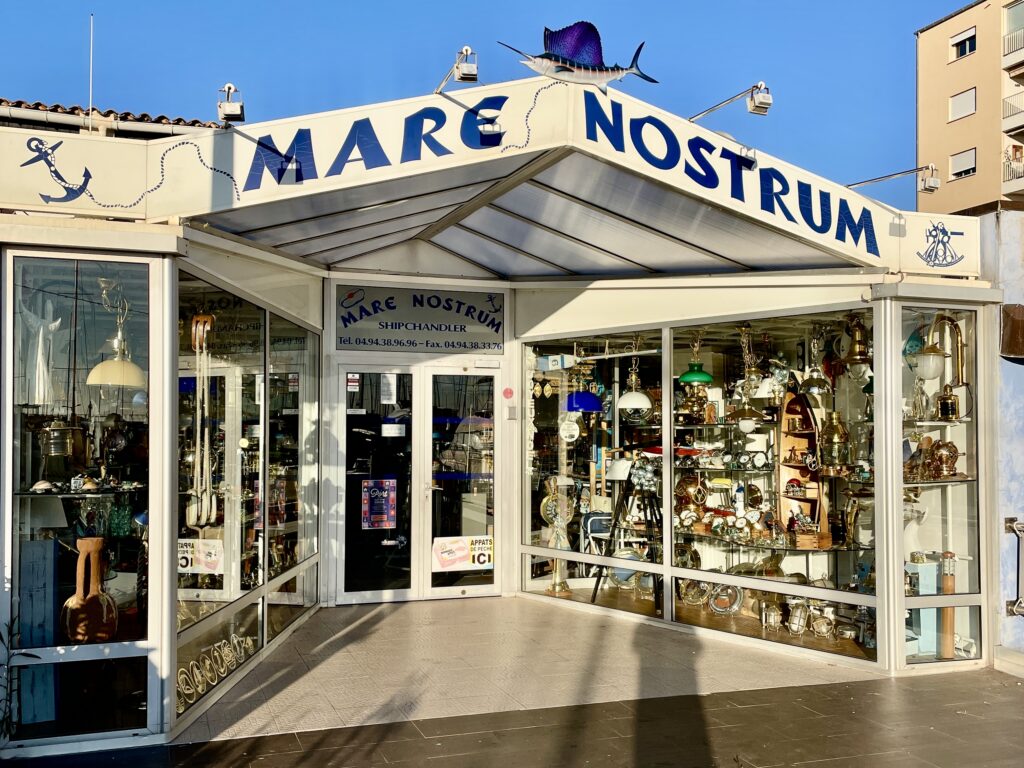
    The range of items sold at Mare Nostrum is breathtaking. A shockingly well stocked ship chandler, despite its small size, every square inch from floor to ceiling is used with impeccable organization. The staff is also just as exceptional, offering extremely helpful and knowledgeable assistance.
    The range of items sold at Mare Nostrum is breathtaking. A shockingly well stocked ship chandler, despite its small size, every square inch from floor to ceiling is used with impeccable organization. The staff is also just as exceptional, offering extremely helpful and knowledgeable assistance.

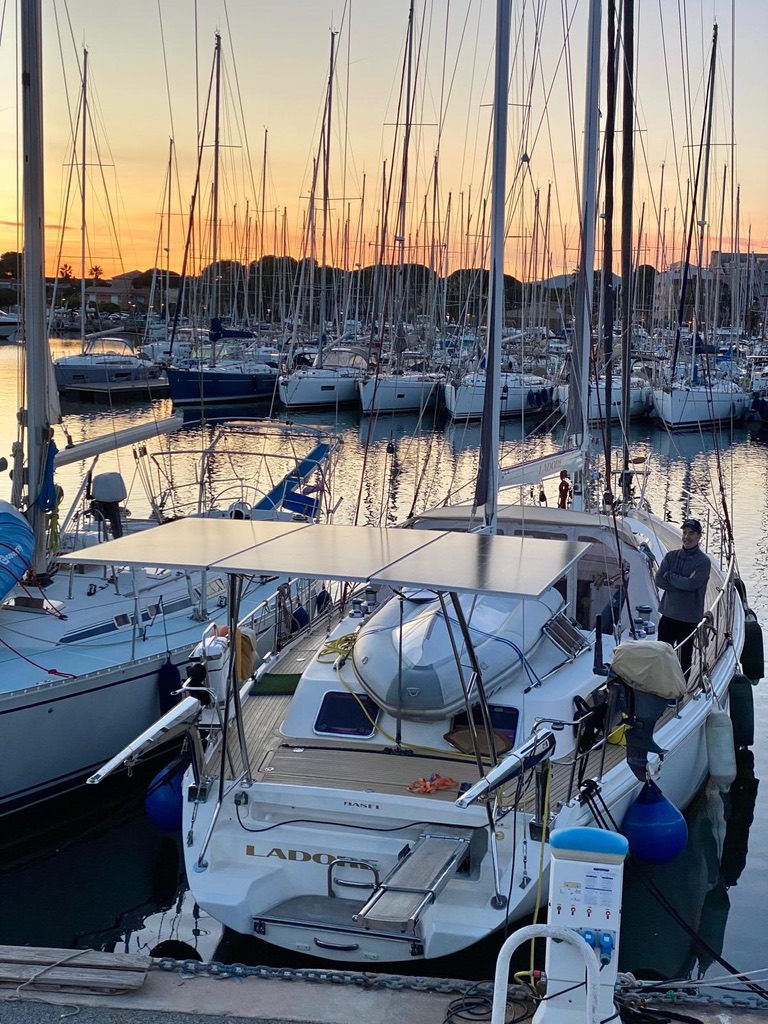
    We completed several upgrades, including replacing our house batteries from lead-acid to LiFePO4, installing an arch with three 460W solar panels, repairing the second deep freezer, replacing the freshwater pump, fixing the hydraulic passerelle, upgrading the interior and navigation lights to LED, and replacing the standing rigging. Juno certainly received many costly upgrades for Christmas!

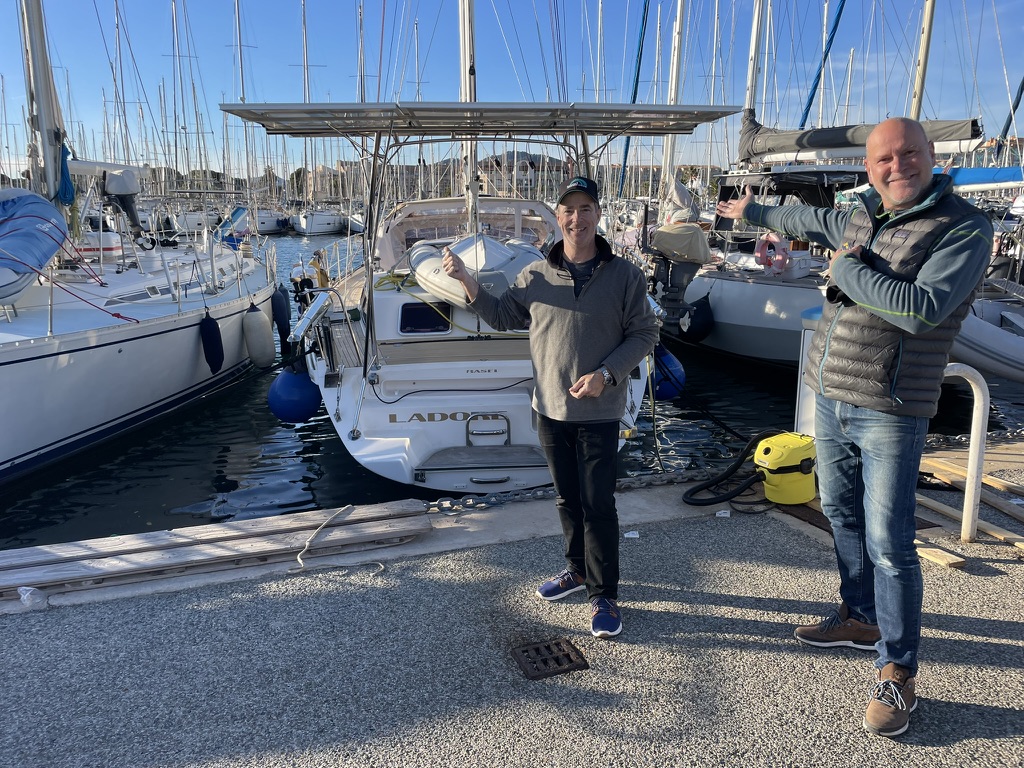
    The stainless steel artist Hubert Millet (INNOX+) to the right, proudly displaying his creation over the Christmas holiday. We are super pleased with our solar arch – it is strong yet minimal and elegant! (Well, as elegant as a solar arch can be… lol…)
    The Captain is proud of the solar panel installation
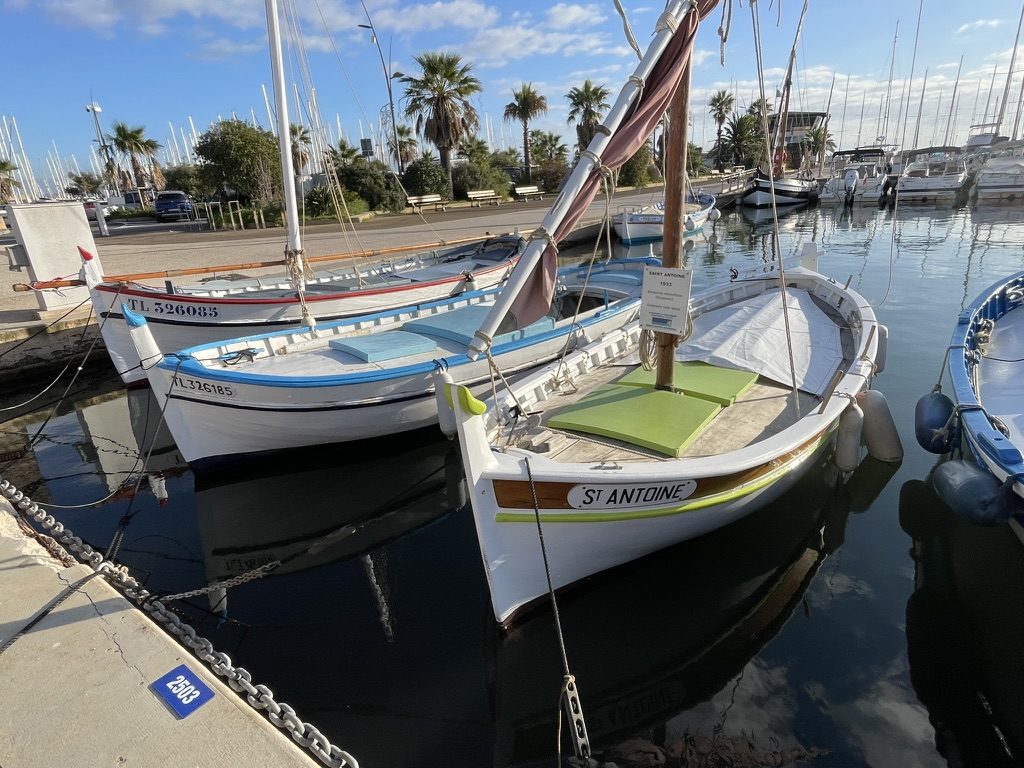
    Pointus (Pointus Provençaux): These traditional, small, pointed fishing boats are deeply rooted in Provençal culture, used for generations for local fishing and celebrated at events like the Fête des Pointus. They are adorable.
    Christmas is in the air!
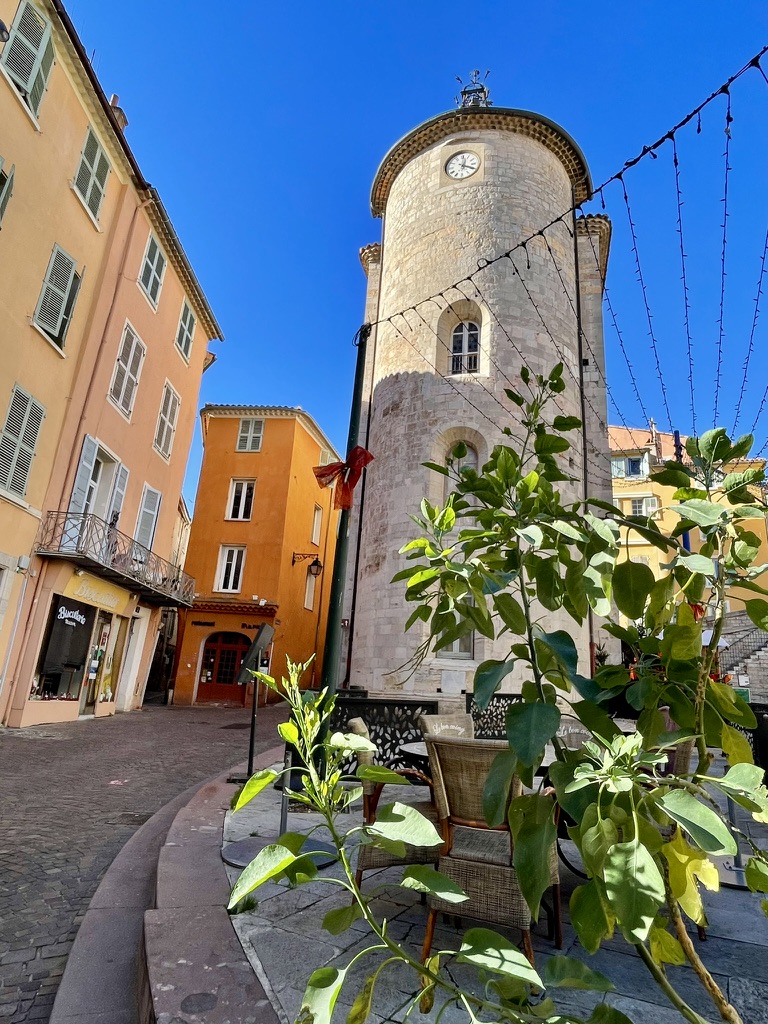
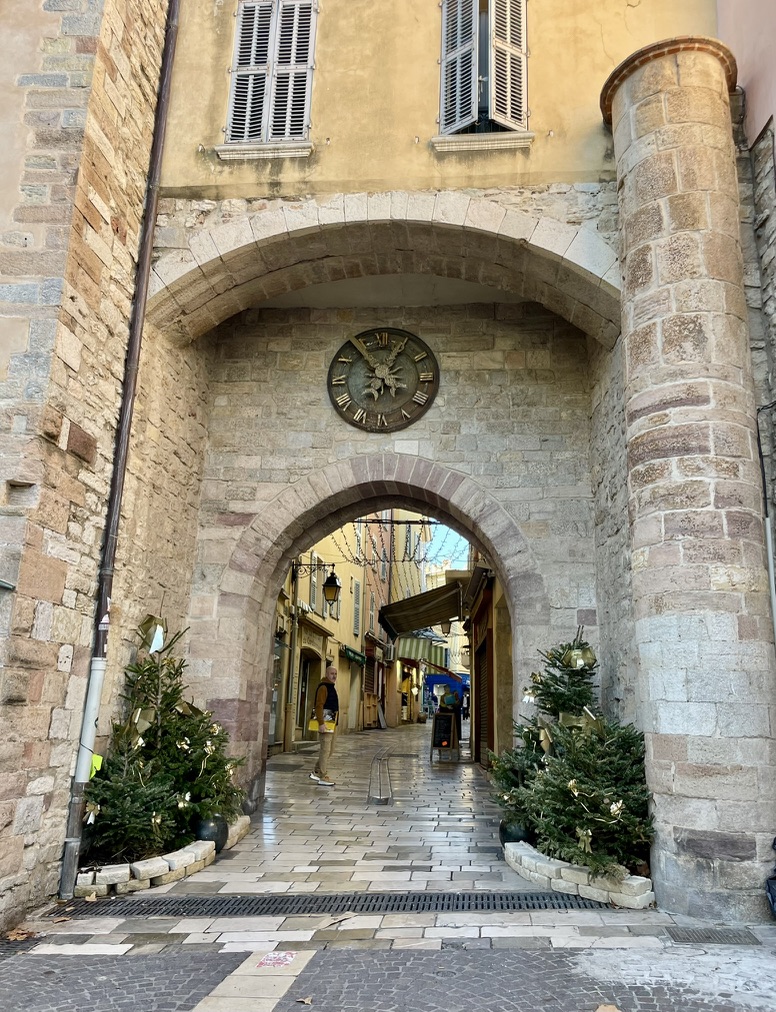
    Hyères’ medieval Old Town
    https://hyeres.fr/monuments-et-sites/
    “The Saint-Blaise Tower is the only remaining vestige of the Templar commandery established in the 12th Century. Like the Templars themselves, the tower served two purposes: religious, with a chapel on the ground floor, and military, with a guardroom on the first floor, accessible only from the outside via removable stairs. A staircase built into the thickness of one of the walls provides access to the fortified terrace at the top of the structure.”
    Hyères’ medieval Old Town
    The holiday firework display was only a few meters from Juno. Happy 2025!
    1. The Mistral is a powerful, cold, dry northwesterly wind blowing from southern France down the Rhône Valley to the Mediterranean’s Gulf of Lion, known for its intense strength (often 50-100 km/h, sometimes higher) ↩︎
    2. Med mooring with a slime line (or lazy line) is a stern-to docking method common in the Mediterranean, where you back your boat to the quay, using a line from the seabed (the slime line) attached to your bow to hold you off, while stern lines secure you to the dock, maximizing space. ↩︎