
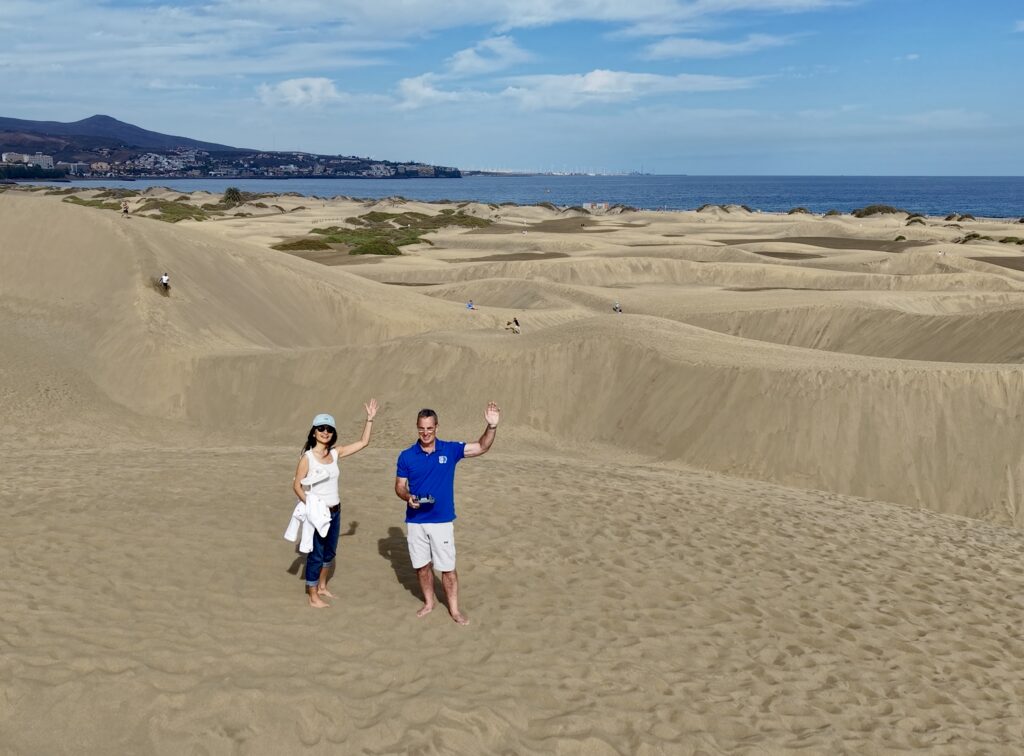
With a favorable weather window ahead of us, we bid farewell to La Línea and embark on the first leg of our Atlantic crossing with a small dose of trepidation and incredulity and plenty of excitement.
Aside from a few intense hours spent navigating heavy tanker traffic in the Strait of Gibraltar1 and keeping an eye out for orcas, the trip from La Línea to Gran Canaria Island was uneventful. Robert and I followed a three-hour watch schedule from 6 PM to 6 AM, taking turns napping during the day whenever we felt tired. This routine worked well for us, and we didn’t feel overly fatigued when we arrived in Las Palmas after covering over 700 nautical miles in four days.
Las Palmas, the capital and largest city of the Canary Islands, is well-known for hosting the Atlantic Arc Rally. Every November, about 150 cruising boats depart from here to Rodney Bay in Saint Lucia. Lucky for us, when we arrived in early February, the majority of the trans-Atlantic sailing boats had already left for the Caribbean, and as such, we had no trouble securing a marina slip in the popular Las Palmas Marina.
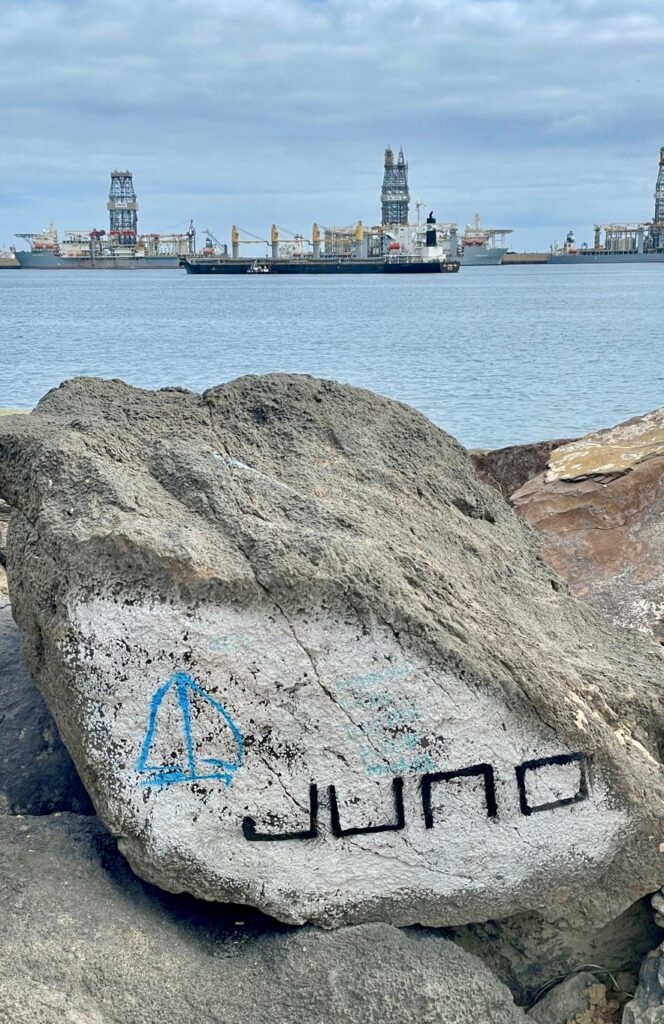
As Robert and I prepared for our Atlantic crossing, many people asked whether we were considering bringing additional crew for the adventure. Most popular sailing books recommend having at least four sailors for the 3,200-nautical-mile (or 3,600-mile) journey, which typically takes about three to four weeks. The challenge for us was that we didn’t have any sailing friends available to join us on this trip. Additionally, we had heard cautionary tales from fellow sailors who had experienced horrendous situations when bringing on crew members they did not know well. After weighing the pros and cons and bolstered by the confidence we gained from two successful multi-day passages, we decided to prepare for a two-person trans-Atlantic journey.
It always feels great to step on land after a long voyage. Once Juno was safely docked at the Las Palma Marina, I stepped off the boat and went for a walk. As I opened the dock gate, I almost ran into a young couple who were putting up a flyer on the bulletin board next to the marina gate. I glanced at their flyer and realized they were looking for a boat to cross the Atlantic. I wished them good luck and continued on my first walk after four days at sea. When I returned to Juno, I saw the same good-looking couple chatting with Robert on the dock. That’s how we met Pau and Claudia.
We soon learned that Pau and Claudia were both in their thirties and from Barcelona. Pau had left his job as a lawyer to become a sailing charter boat captain, while Claudia had recently taken a sabbatical from her stressful job as a fashion designer to sail with Pau for a year or two. Their goal was to hitchhike their way to Asia. Unfortunately, the family they had been sailing with on a brand-new catamaran unexpectedly decided to postpone their transatlantic plans for a year or two after reaching the Canary Islands. This last-minute change left Pau and Claudia in a difficult situation.
For those unfamiliar with sailing routes, the most common circumnavigation route is the mid-latitude trade wind route, the same path that Columbus took to reach the Americas. Therefore, to travel from Europe to Asia, Pau and Claudia must first sail west across the Atlantic to North America, then continue west from there to the Pacific Ocean and Asia.
Pau and Claudia seemed genuine, mature, and trustworthy, and they also had solid sailing experience. Our chance encounter with them reopened the closed question: should we take additional crew members for the crossing?
That night, Robert and I invited Pau and Claudia to dinner to get to know them better. We hit it off wonderfully, and soon after, we invited them to join us on our Atlantic crossing.
Since we began our cruising life, we have experienced several serendipitous encounters that have greatly enriched our travels, and meeting Pau and Claudia was one of the highlights.
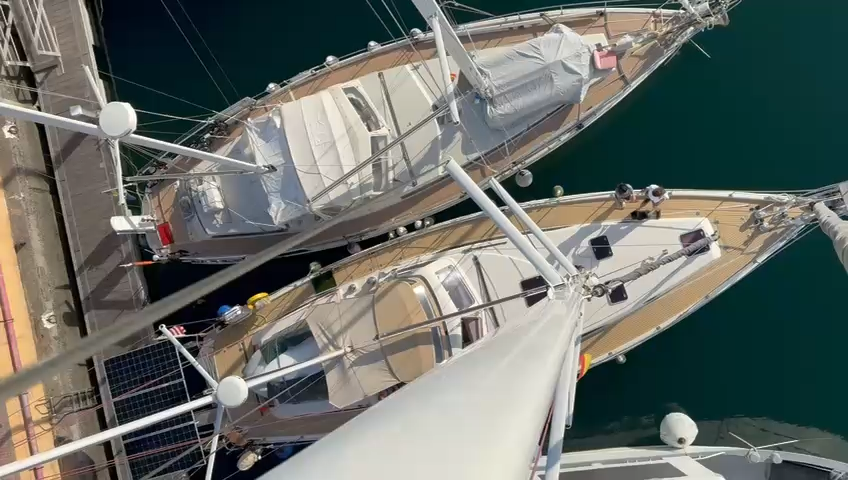
Over the next ten days, we kept busy finishing the necessary preparations. Robert and Pau worked together to fix a wiring issue with our wind instrument, which required a couple of trips to the top of the mast. At the same time, Claudia and I gathered extra food and supplies for our crew of four. With Claudia’s local knowledge, we stocked up on Jamón and my all-time favorite cheese – Oveja con Trufa (a hard sheep milk cheese with truffle). We also completed several maintenance tasks to ensure that Juno was in top condition. Las Palmas is a lovely city. This is one of the places I can see myself living in and being happy. People are wonderfully friendly, the climate is sunny and mild year-round, the town offers all the modern conveniences, an excellent bus system, and a lower cost of living, yet it remains quaint and relaxed.
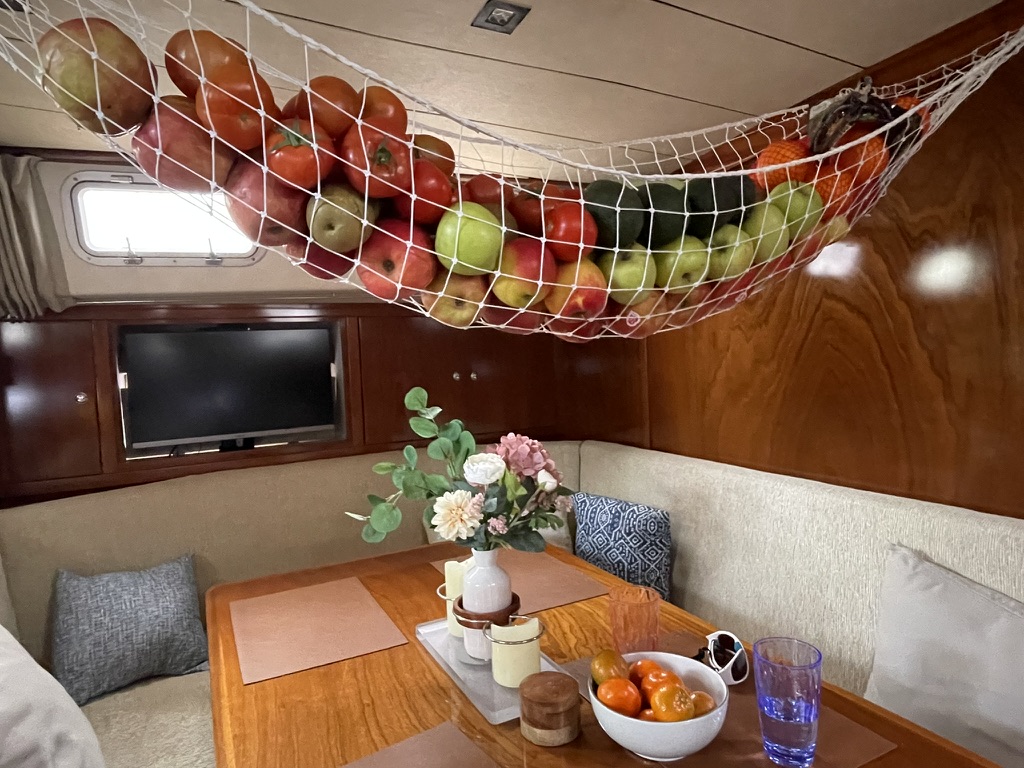
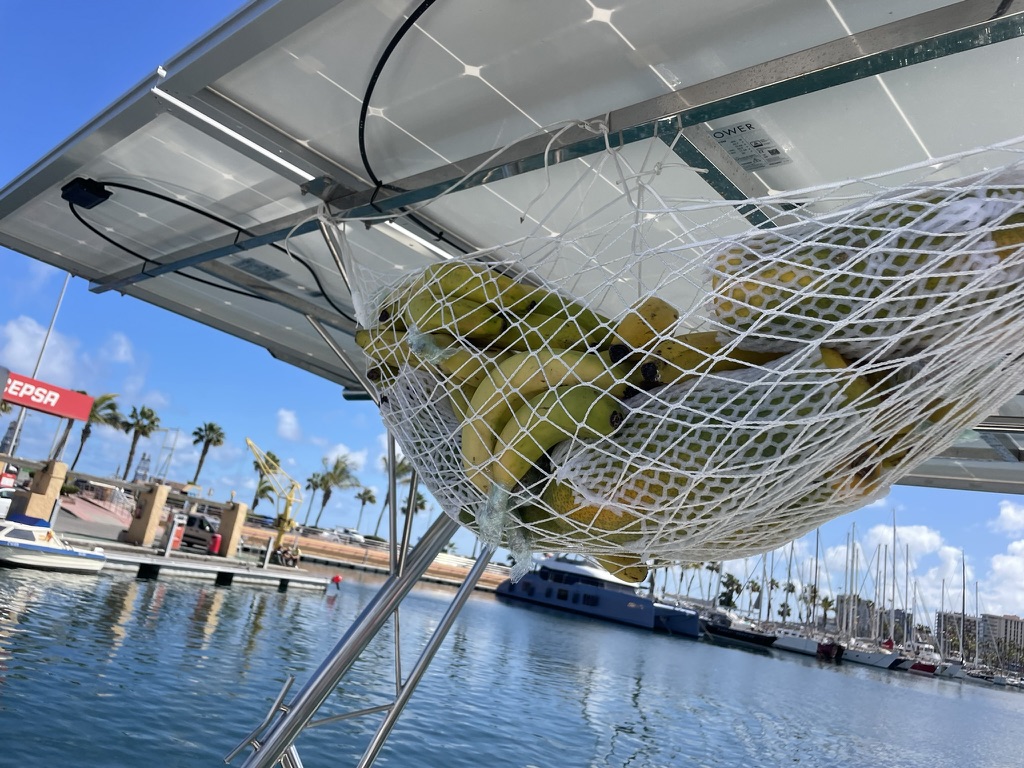
On February 12, exactly 90 days after Robert and I arrived in Barcelona with 16 pieces of luggage and boarded Juno, we set sail to leave Europe and head west toward the Caribbean, with Martinique as our destination. Our sailing plan was to follow the traditional sailor’s adage for crossing the Atlantic: “head south until the butter melts, then turn west.” We intended to only sail “close” to Cabo Verde before turning west to catch the trade winds.
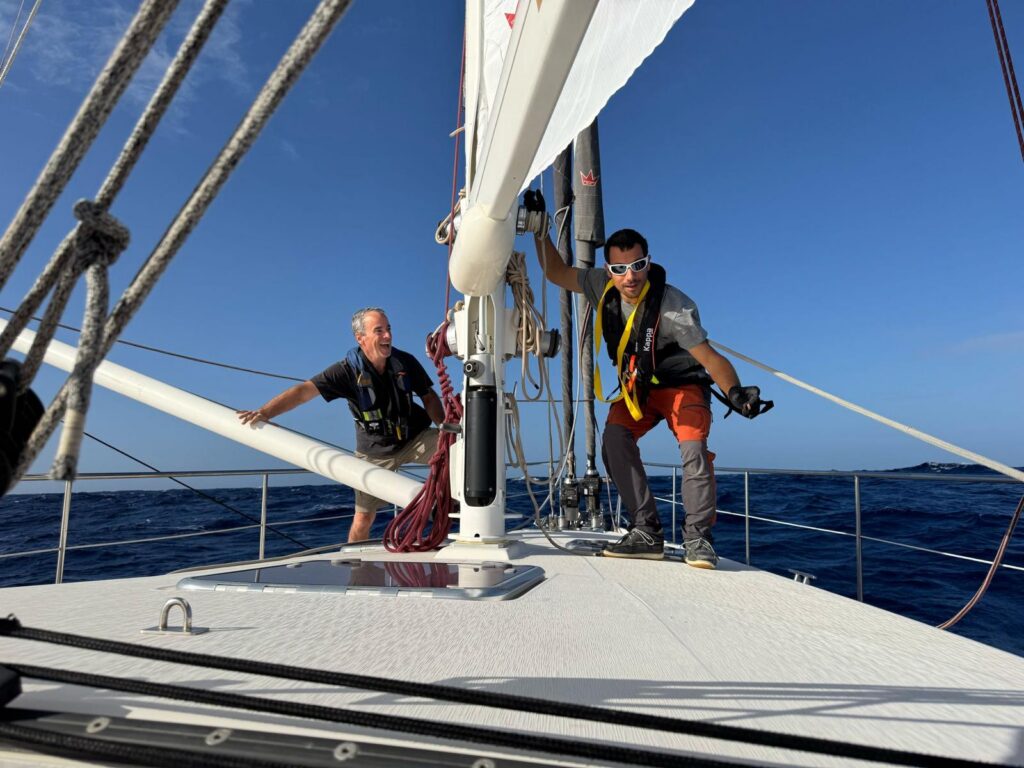
Crew morale was excellent, and everyone adapted well to life at sea. Robert and Pau deployed Juno’s whisker pole for the first time and experimented with various sail configurations as the wind strength and directions varied. We established a watch schedule routine and prepared delicious meals every day. Entertainment at sea includes reading, listening to audiobooks, playing guitar (both Pau and Robert play), watching sunsets and dolphins, playing chess, and fishing.
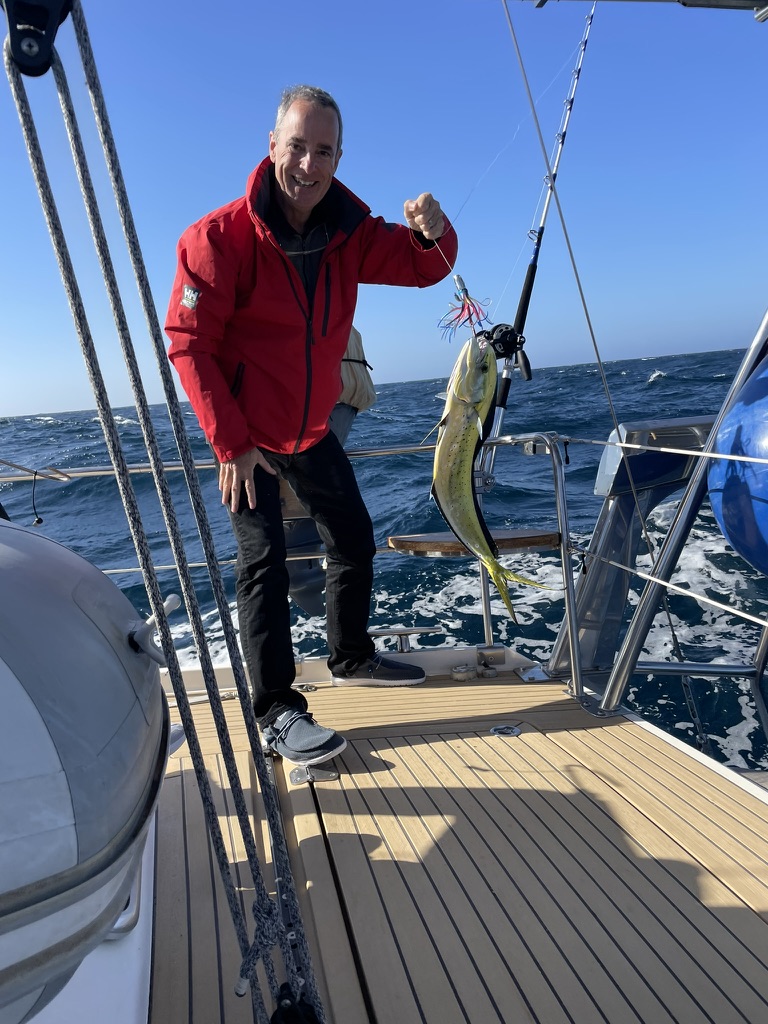
We had set a fishing rod in trolling mode, and shortly after catching our first mahi-mahi, we hooked another mahi-mahi! Unfortunately, it managed to escape just as we were pulling it up. What a bummer! After losing that second fish, our fishing luck took a turn for the worse. Soon after, we hooked something BIG! Whatever it was that bit the lure took all the line, and Pau and Robert had to take turns trying to reel it in. All hands were on deck, and there was a rush of excitement in the air!
In an instant, before any of us could react, we heard a bang and a whoosh, and then silence. No line, no rod—everything had disappeared. The fish had taken the fishing rod! Robert had set the rod in the holder for a second to put on his gloves. The pressure on the rod was so great that it caused the holder to flip at its mounting hinge. Now, this poor big fish had to drag a 600 Euro fishing rod that Robert had gotten for Christmas. The worst part – we would not be able to fish for the rest of the passage. Ugh!
We were still feeling down about losing our rod when the wind increased to over 25 knots and night fell. The sea became rougher, with 2-3 meter waves hitting us broadside, causing an uncomfortable side-to-side motion. It was time to reduce sail and prepare for the night watch.
Yet another heart-sinking surprise for the day, we couldn’t reduce the headsail! The furling motor was turning, but the sail wouldn’t roll in. Pau put on his foul-weather gear, clipped on his personal flotation device (PFD), and ventured to the foredeck for a closer look. What he found was concerning: the screws securing the roller furling mechanism to the motor had come loose. Four stainless M8x20 hex screws were supposed to hold it in place; three had now been lost to the sea, and the last one, fortunately, landed on the deck near the windlasses and was recovered.
In the dark with a rolly sea, we managed to get that one screw partially back in and furled the sail completely; however, it was now considered out of order until we could perform a permanent repair. The genoa sail track extrusion had slid down into the motor adapter, and we couldn’t replace the screws without lifting it back up about 10-11 inches. Repairing the furling mechanism would require removing the sail, which was impossible at sea. Without a functional jib sail, Juno’s speed and balance would be significantly affected, and we still have at least 75% of the distance to go before we reach the Caribbean!
Fortunately, we were still on course south towards Cabo Verde. Mindelo, here we come!
- The Strait of Gibraltar is one of the world’s busiest maritime choke points, with around 300 large ships daily connecting the Atlantic and Mediterranean, carrying significant global trade, and featuring major transshipment hubs like Algeciras and Tanger Med, requiring strict adherence to Traffic Separation Schemes (TSS) and vigilance due to strong currents and dense traffic. ↩︎
Leave a Reply