
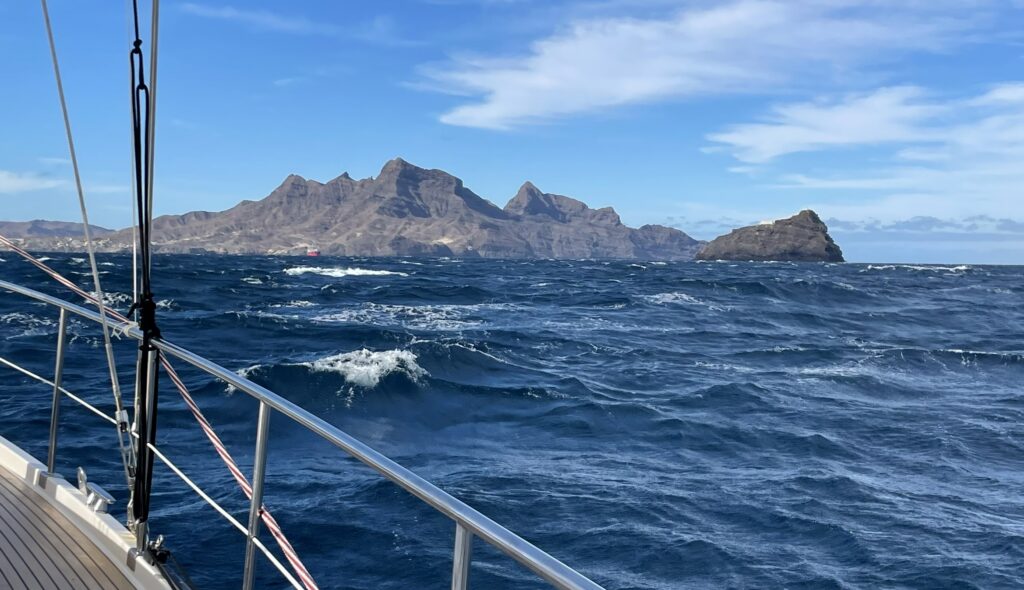
On the early morning watch shift, after six days at sea, I caught my first glimpse of a rugged coastline on the horizon – Santo Antão, Cabo Verde.
Cabo Verde (or Cape Verde) is an island country in the central Atlantic Ocean off the coast of West Africa. The nation consists of ten volcanic islands lying west of Cap-Vert, the westernmost point of continental Africa. It is remote.
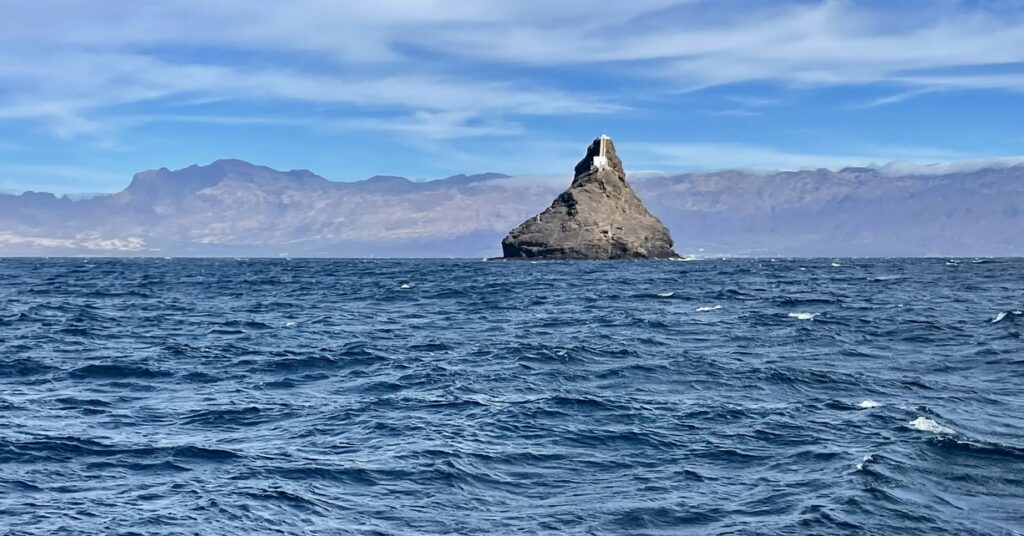
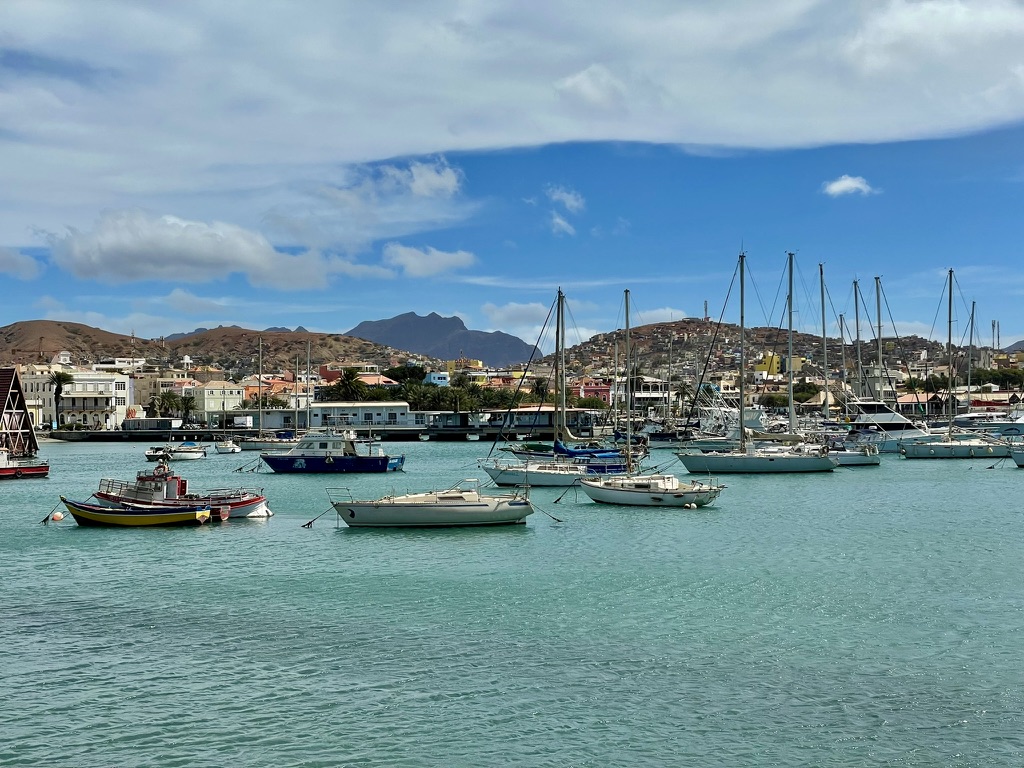
Our destination is Mindelo, a port city on São Vicente, and it is the only city in Cabo Verde with a sizable modern marina. After 1.5 days of motor-sailing due to a malfunctioning headsail furler, we made landfall at Mindelo Marina.
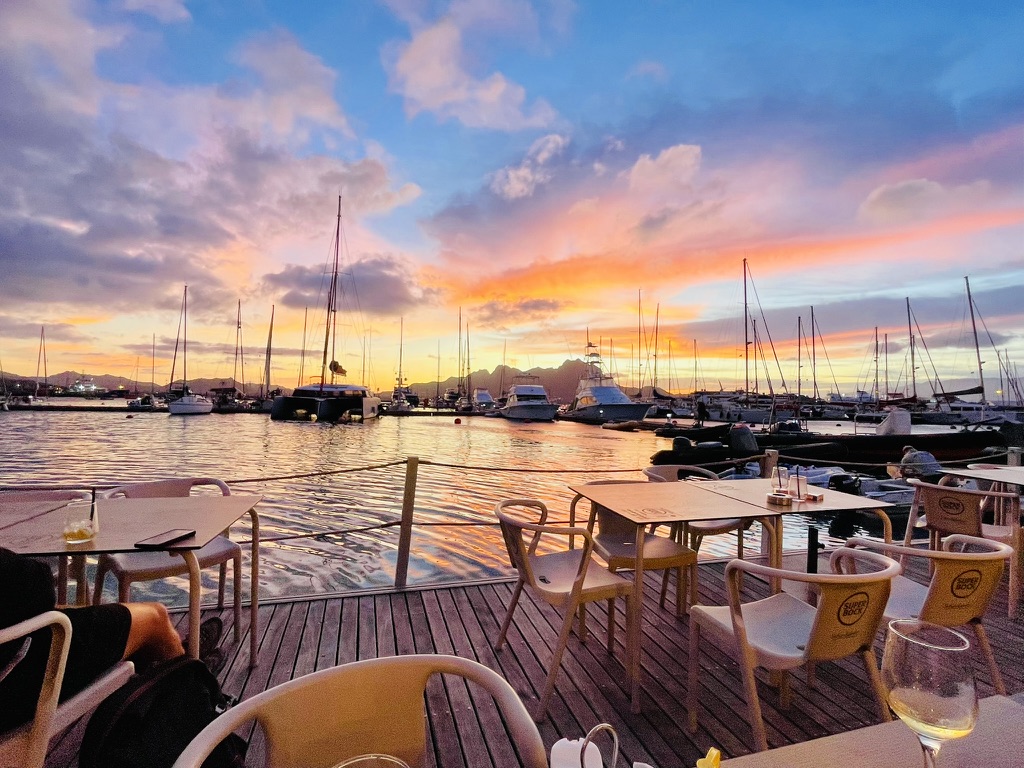
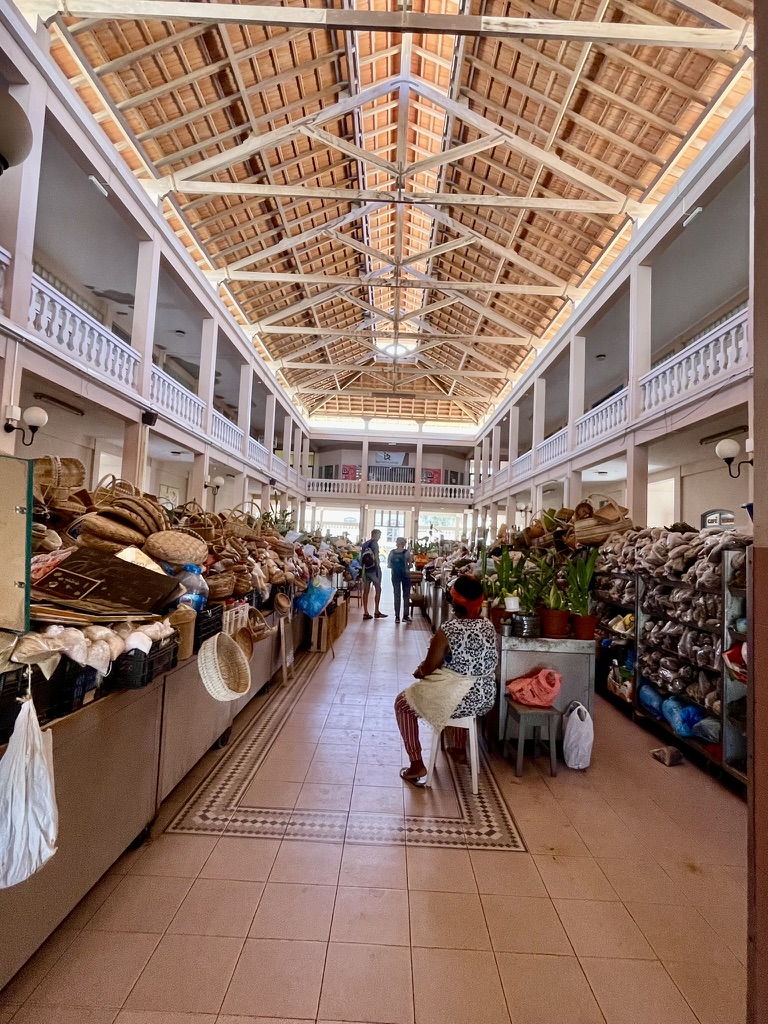
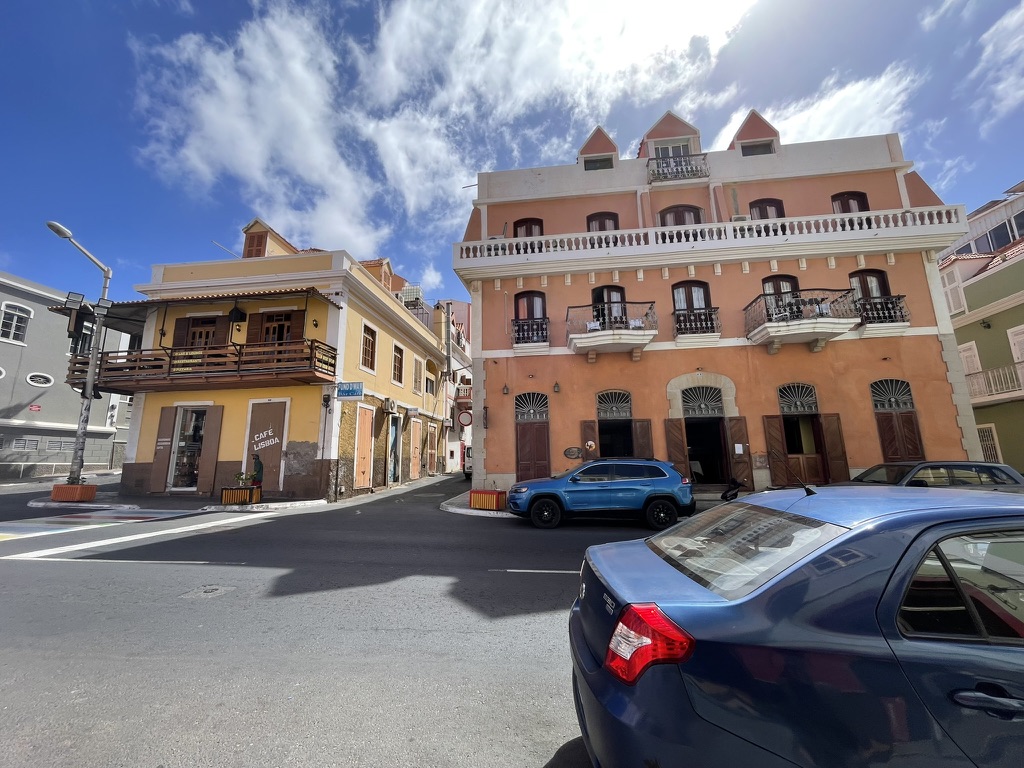
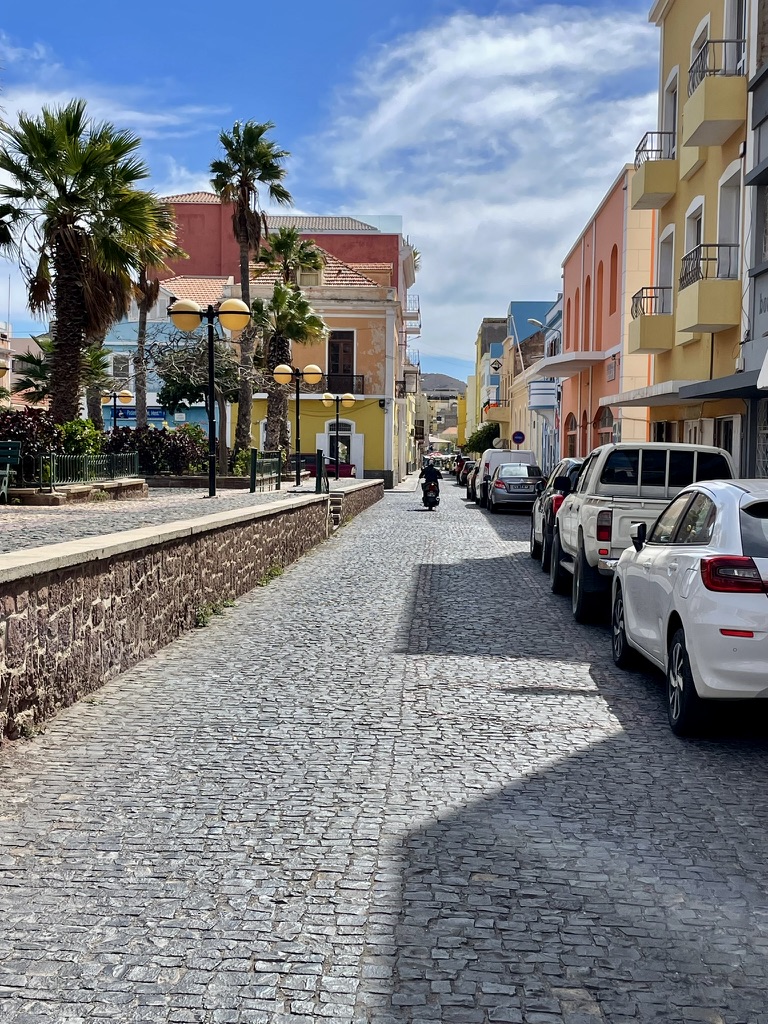
The raw beauty of Mindelo immediately captivated us. It is evident that Cabo Verde is a developing country. Its historic significance in the Atlantic trade from Africa has greatly declined in modern times. Although it gained independence from Portugal in 1975, Portuguese influence remains in its colonial-era buildings, culinary traditions, and music. Speaking of music, it filled the streets every evening after sundown.
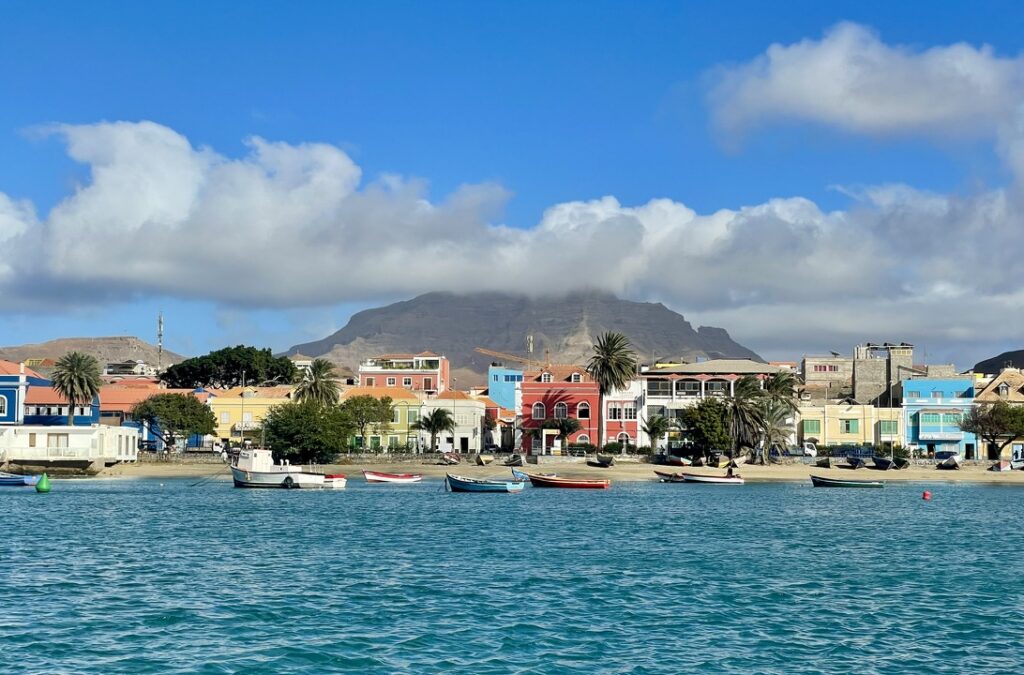
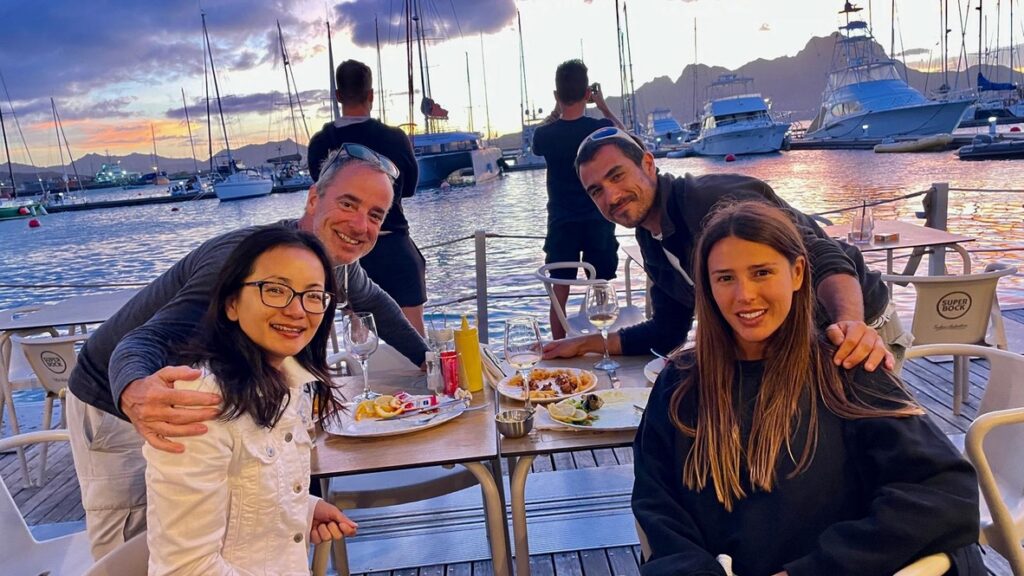
Not sure why, but the two guys in the background of this picture remind me of the movie The Matrix.
We, however, were not mere tourists; we had important tasks to accomplish here! To repair the furling mechanism, we first needed to remove the headsail, which, as it turned out, was more challenging than we had anticipated. Every sailor knows that the ideal condition to remove sails is on a windless day. But in Mindelo, Feb offered no such days! The consistent trade winds we depended on for sailing across the Atlantic Ocean were working against us in this incident. For the first three days after our arrival, the winds blew steadily at 20 to 25 knots. After staring at the wind instruments for 3 days, we finally devised a plan to tackle the sail removal and repair at sunset on Day 3. Long story short, the four of us managed to bring down Juno’s massive genoa sail just as the wind dipped to 12-15 knots for a very short moment. The onlookers cheered our success, and we high-fived each other with great relief.
The next challenge, we did not have the exact screws for the repair and could not source them in Mindelo. This problem was solved by the clever captain. He managed to find some stainless steel screws from a local hardware store and altered them with a grinder to fit the purpose. Pau and Robert completed the repair and were confident that it would last us for the crossing.
We cast the dock lines after a short four-day stay in Mindelo and resumed our Atlantic crossing. This unplanned visit to my first African country left a deep impression on me.
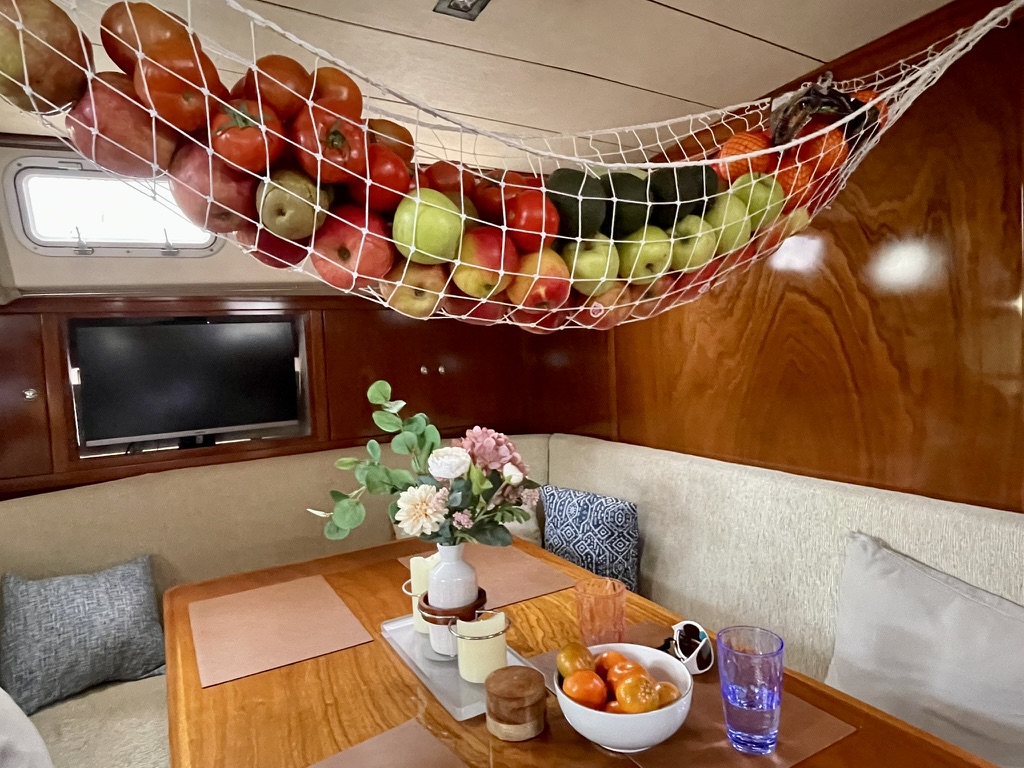
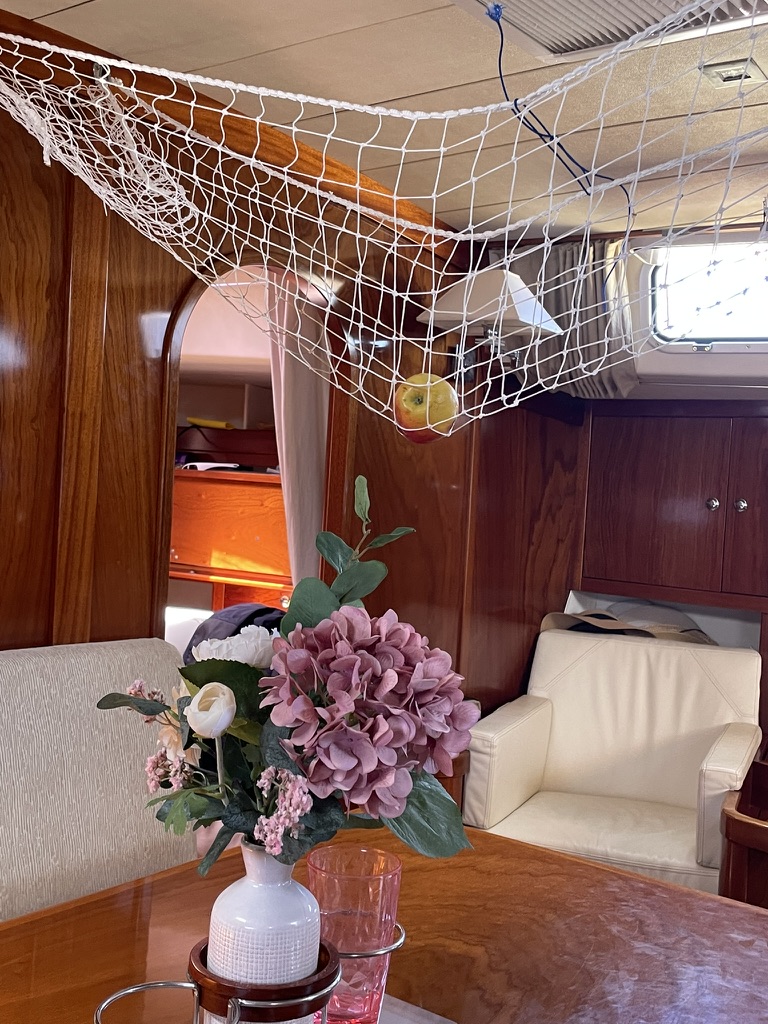
I want to use the words “smooth sailing” to describe the rest of our Atlantic transit journey, except that “smooth” is not the correct adjective. The late northern Atlantic storms were active in February and March of 2025, which generated a north swell that constantly hit us on the broad side, causing Juno to roll in an uncomfortable side-to-side motion. It often got worse during sunset, as the east-to-west trade wind softened, and cooking for dinner was quite an arduous yet comical exercise. Claudia was my cooking assistant, with the main task of holding down plates, bowls, and their contents. Dish washing was definitely a two-person job. Daily exercise consisted of balancing muscles while sleeping, holding on while moving around, and occasional pull-ups on the companion doorway. Days started to blend together. We saw no ships but one during the first 11 days at sea. We ate our last apple on the day before arrival! Great success in provision planning.
That one ship we saw became our “buddy boat”. As we were beating into the wind and waves rounding the southern tip of Santo Antão island, we caught a glimpse of another sailing vessel. We checked it out on our AIS and learned that it was a pleasure sailboat, the same length as Juno, heading the same direction as we were. We hailed them on the radio to say hi, and found out that this boat was also an Amel 54, heading to Martinique. What a coincidence! Throughout the journey, the two captains maintained daily communication about our positions and conditions until we reached Le Marin.
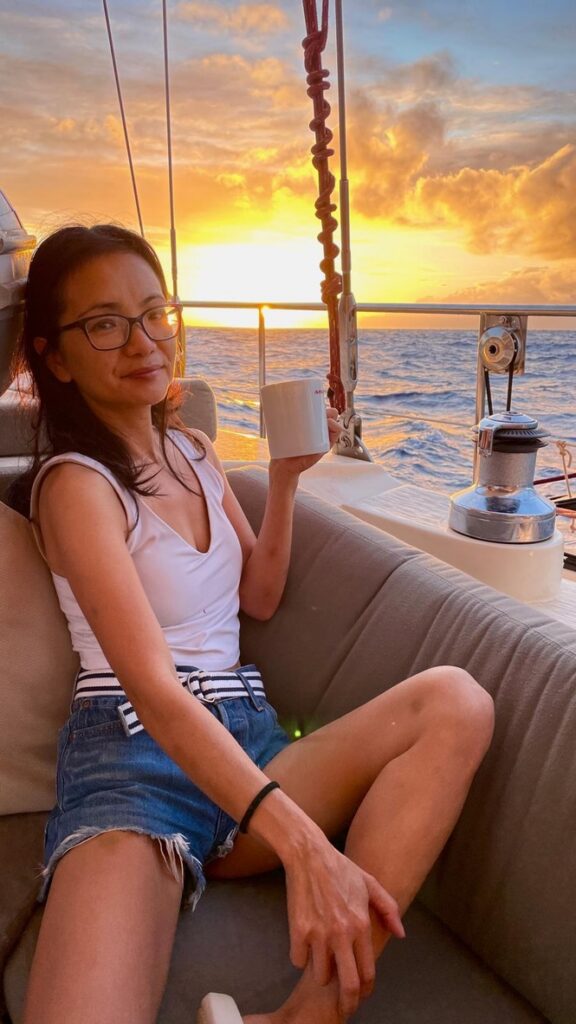
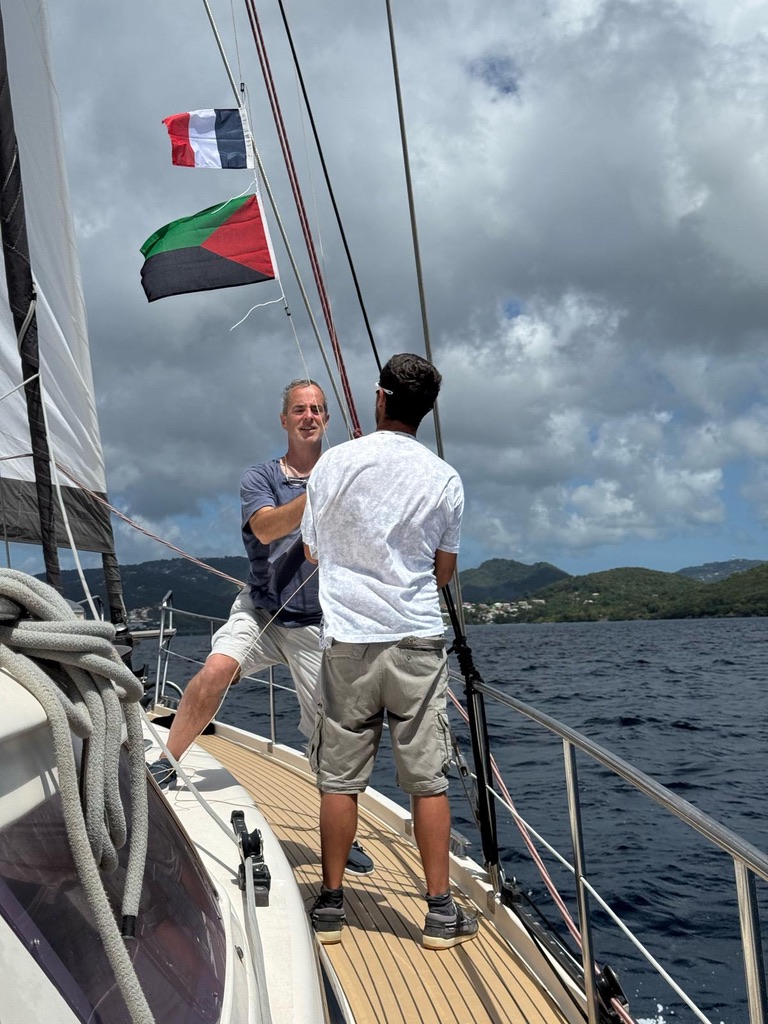
On day 13, we made landfall at Le Marin, Martinique, safe and sound.
Quick stats for the Atlantic Crossing
- Total distance traveled: Las Palmas to Mindelo ~900 NM; Mindelo to Le Marin ~2200NM; total ~3100 NM
- Total sailing days: 6+12.9= 18.9 days
- Total engine hours: 49 hours; mainly due to motor sailing for 1.5 days before reaching Mindelo
- Total generator hours: 20 hours
- Eggs consumed: ~200
- Apples consumed: ~60
- Repairs needed: 2 incidents
- Injuries or illness: 0
Leave a Reply